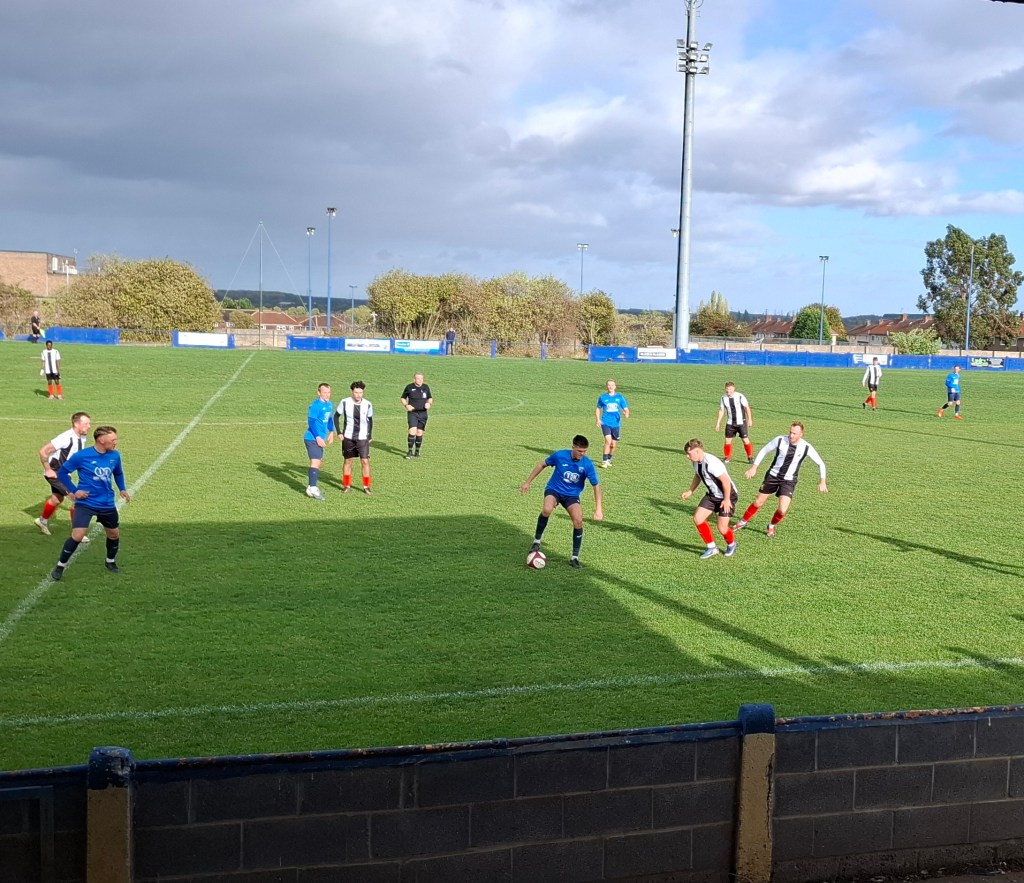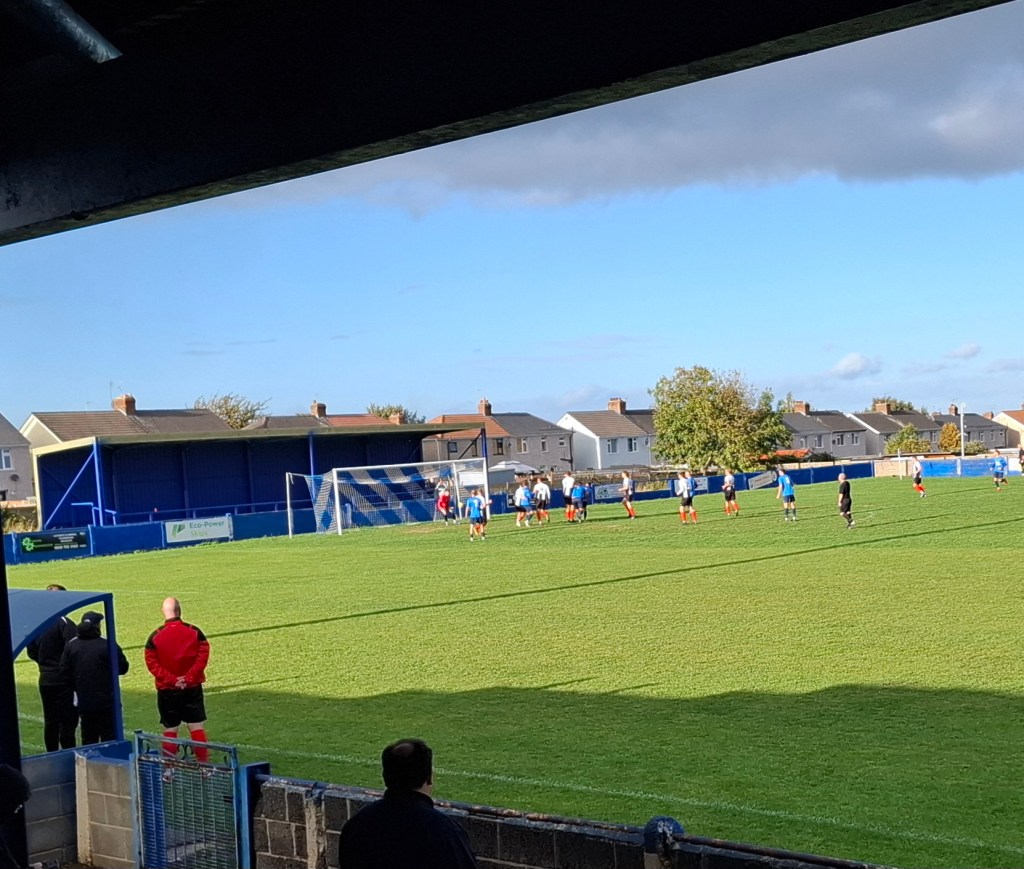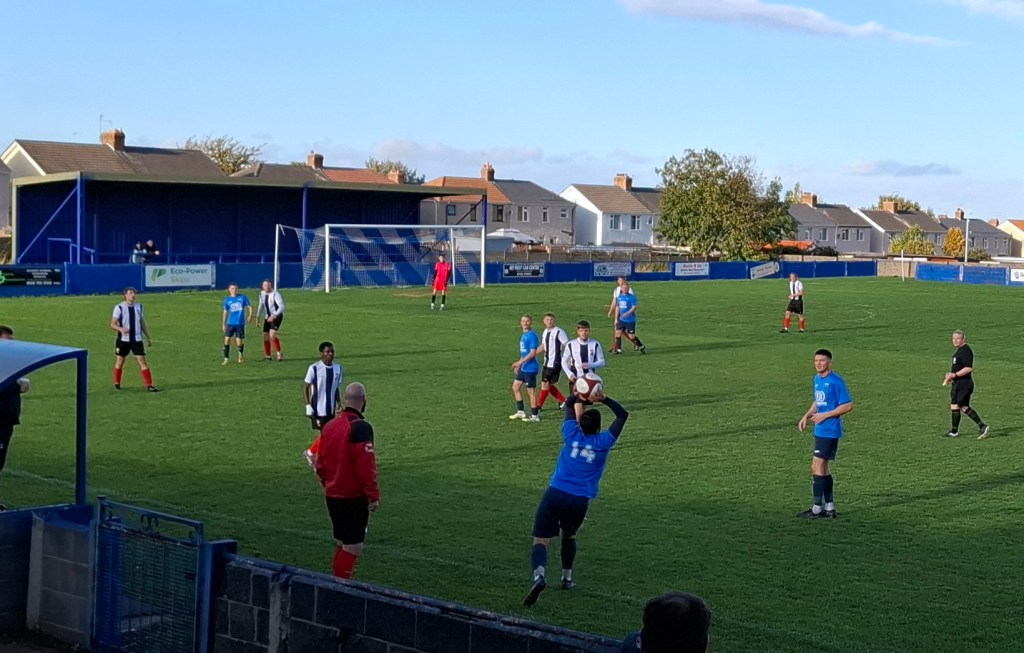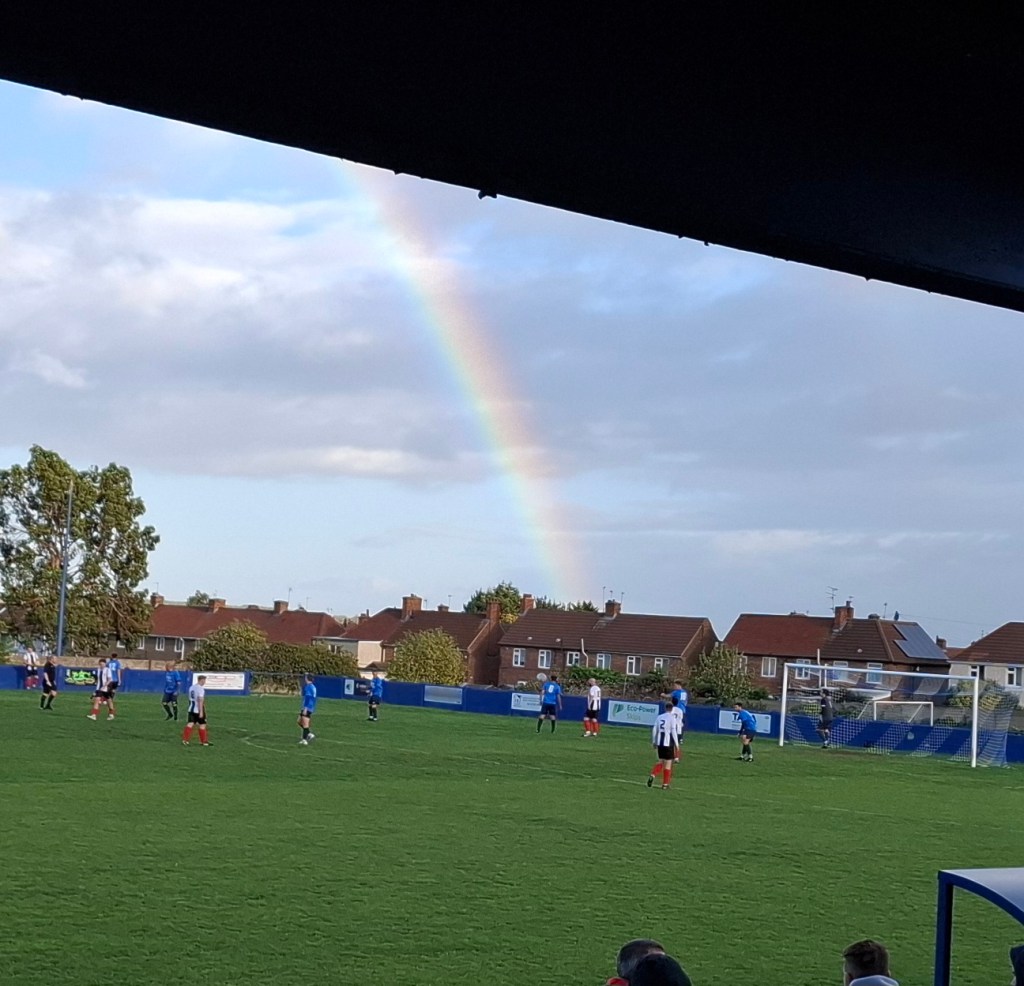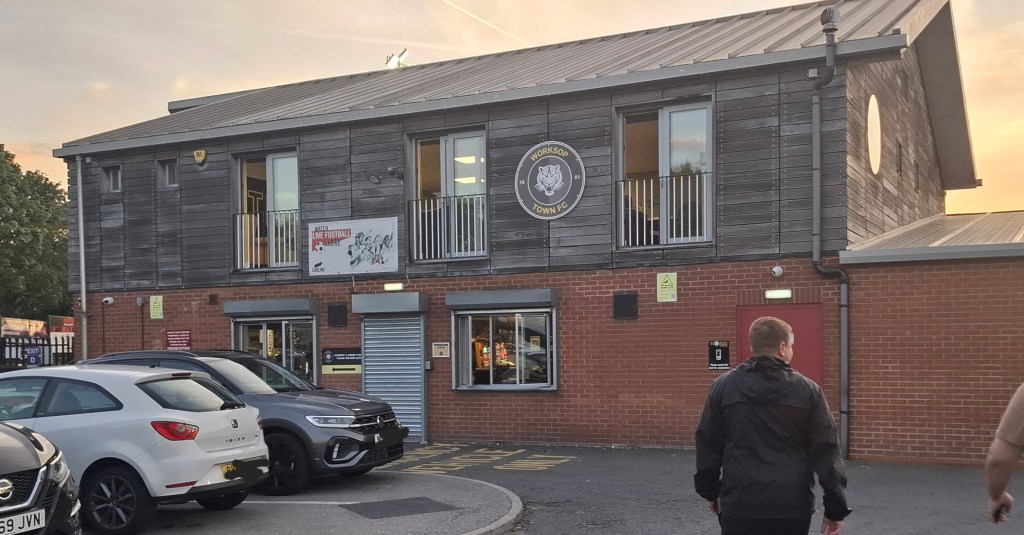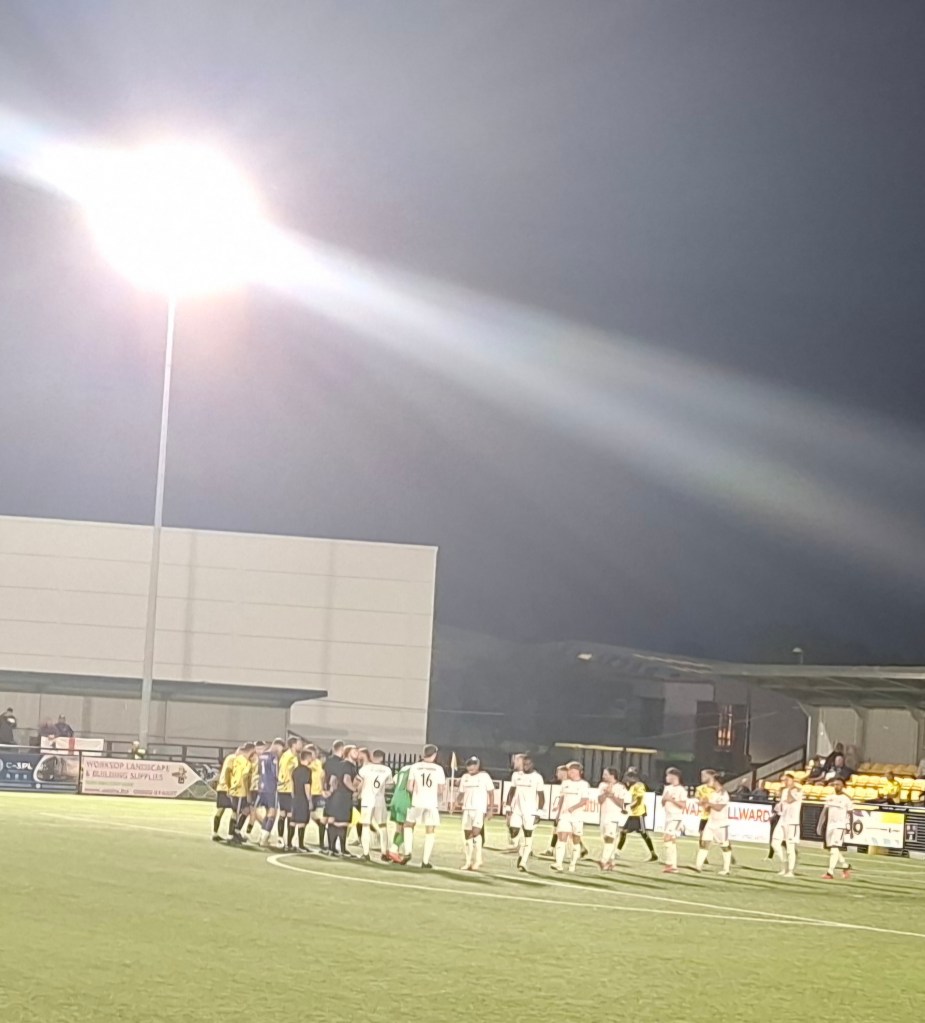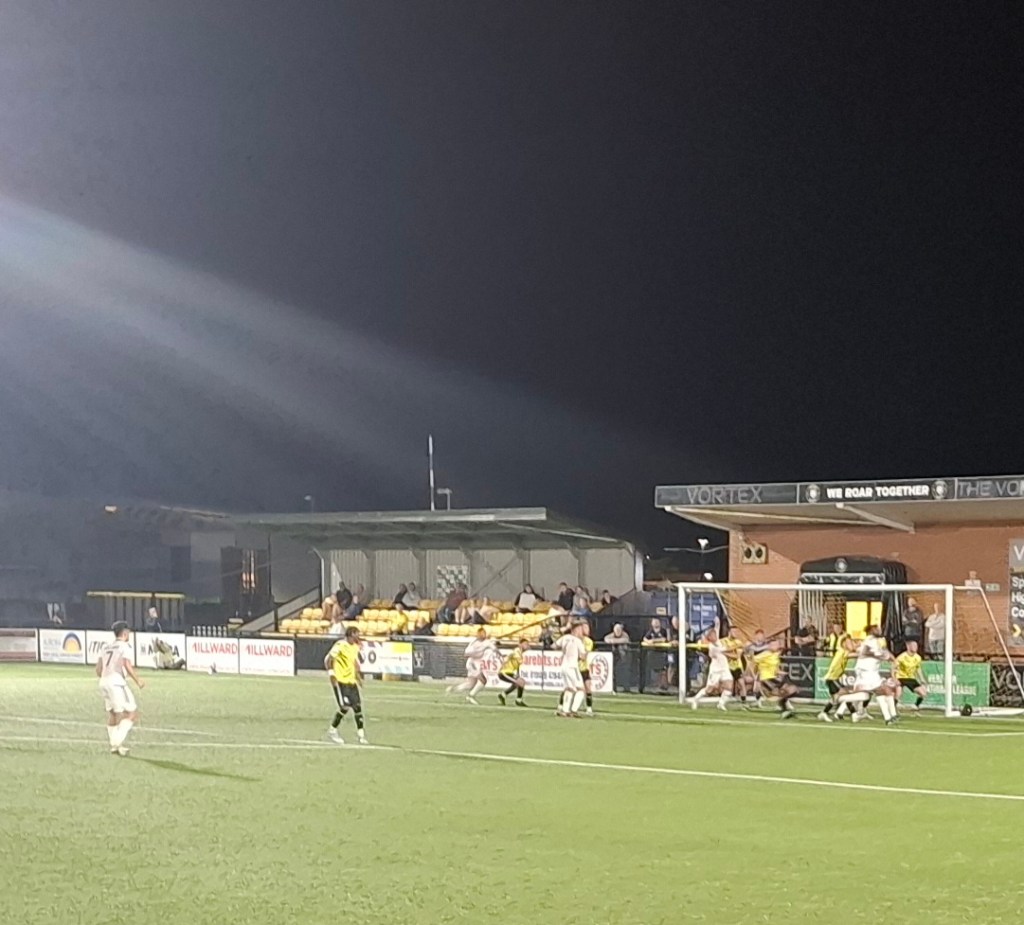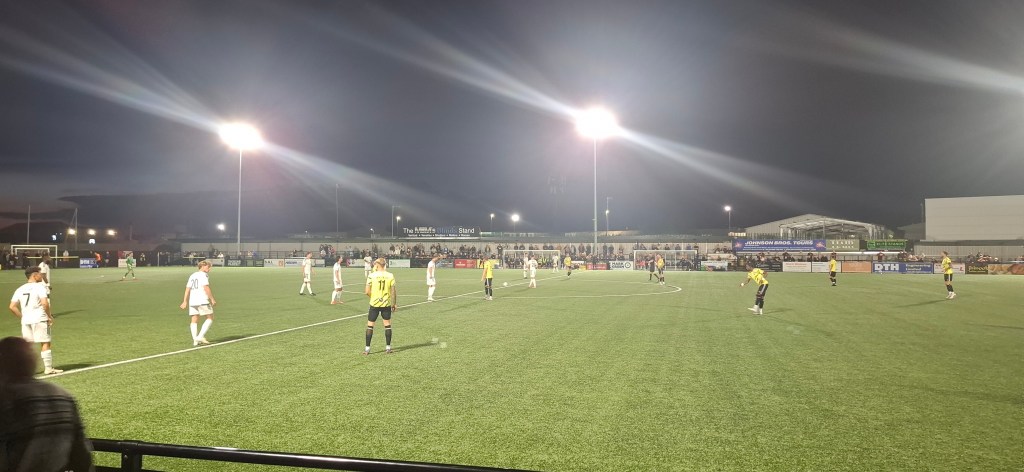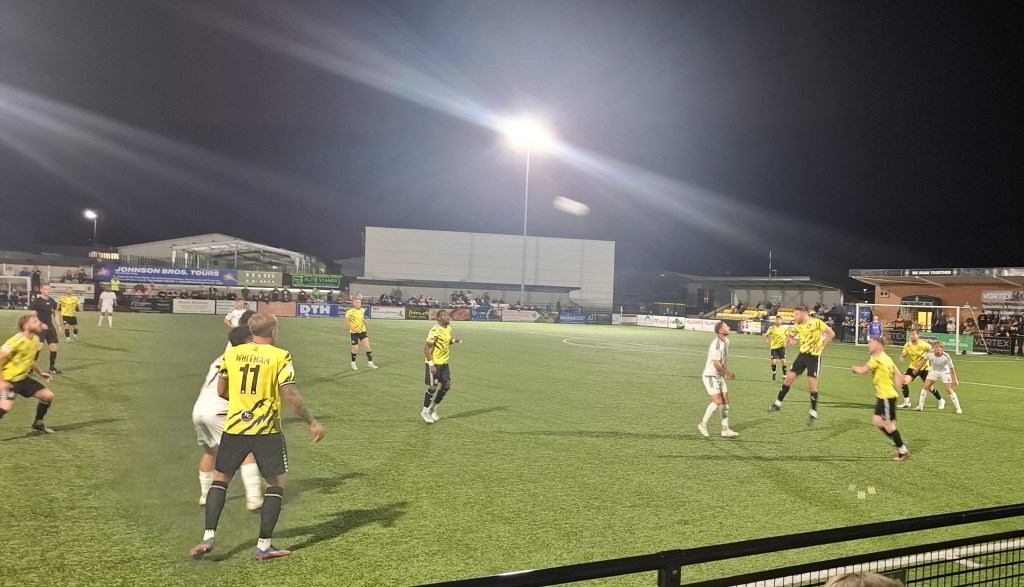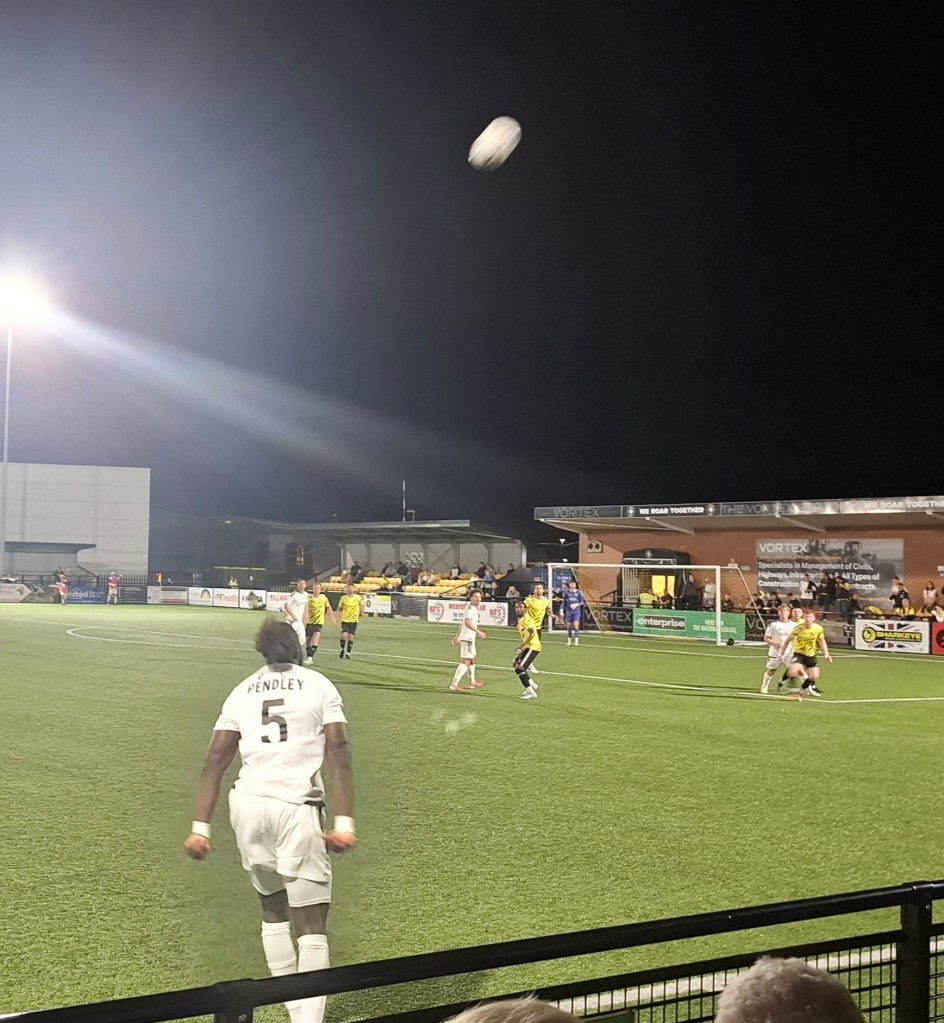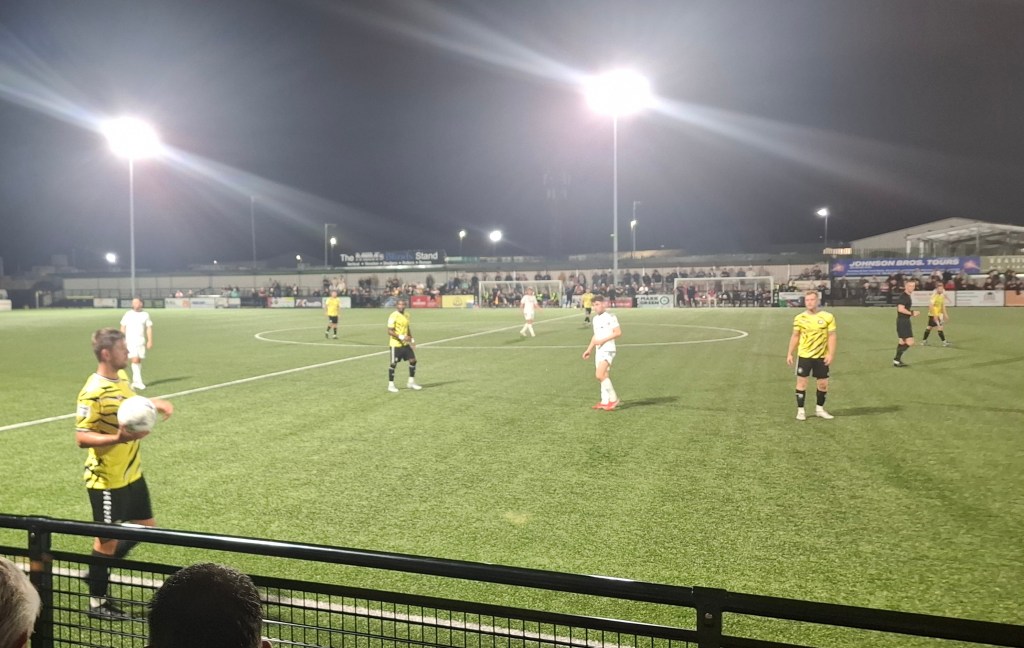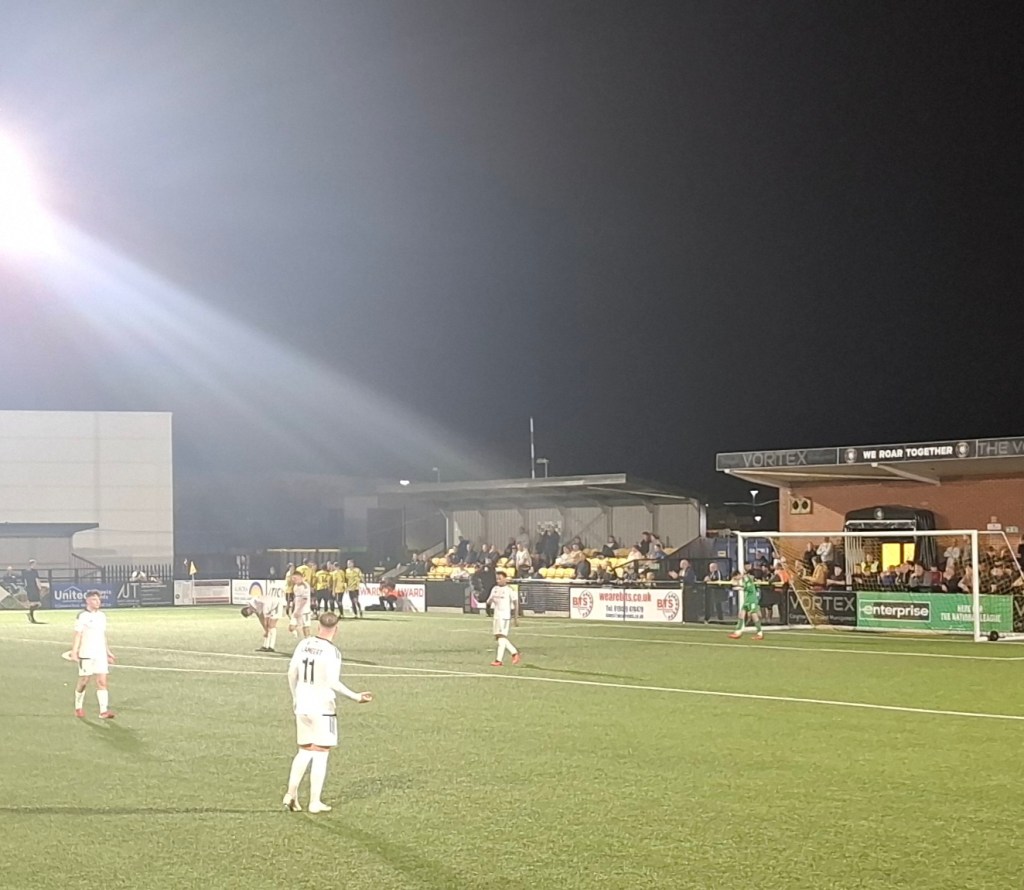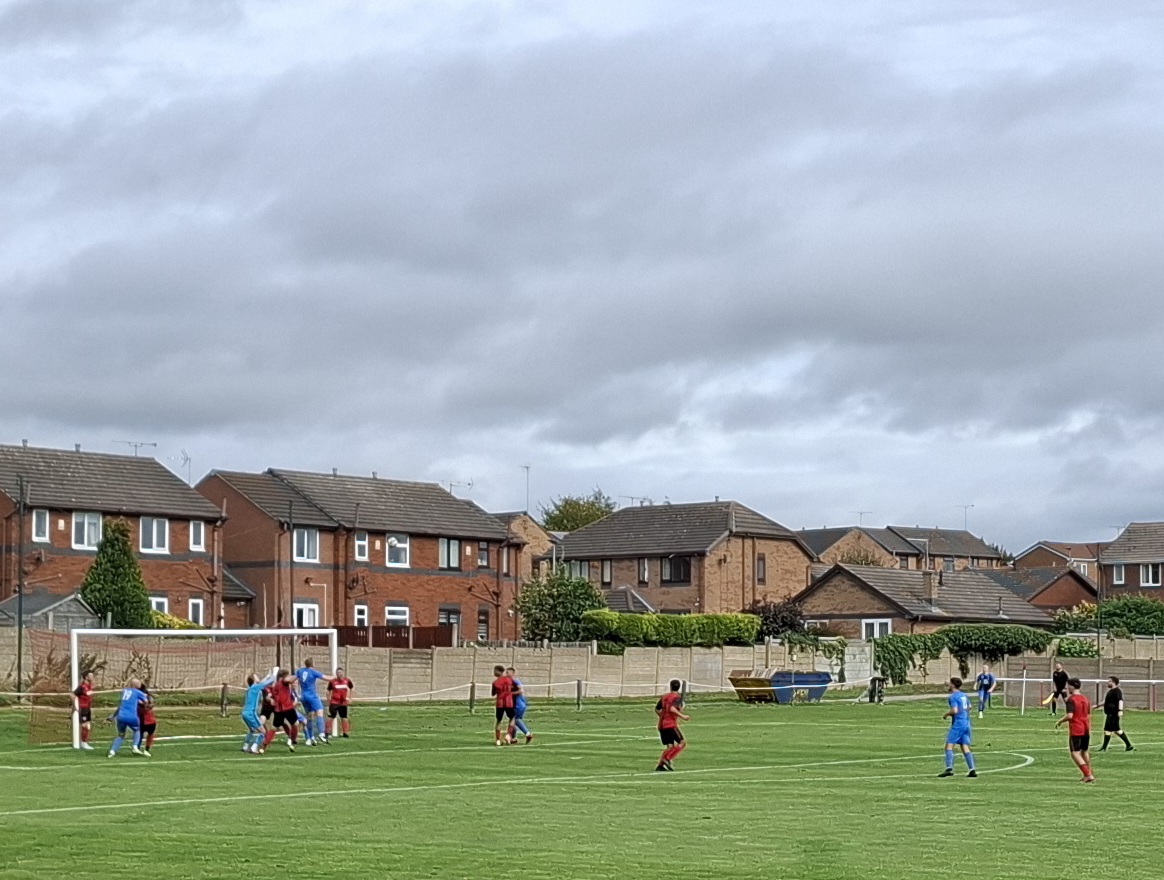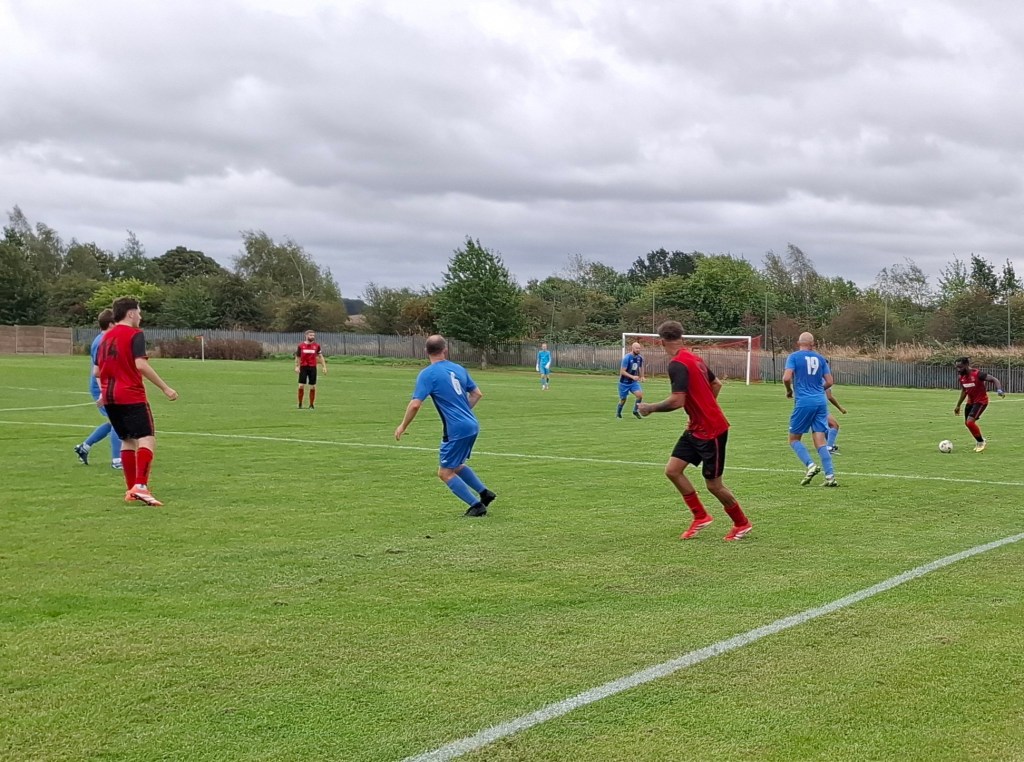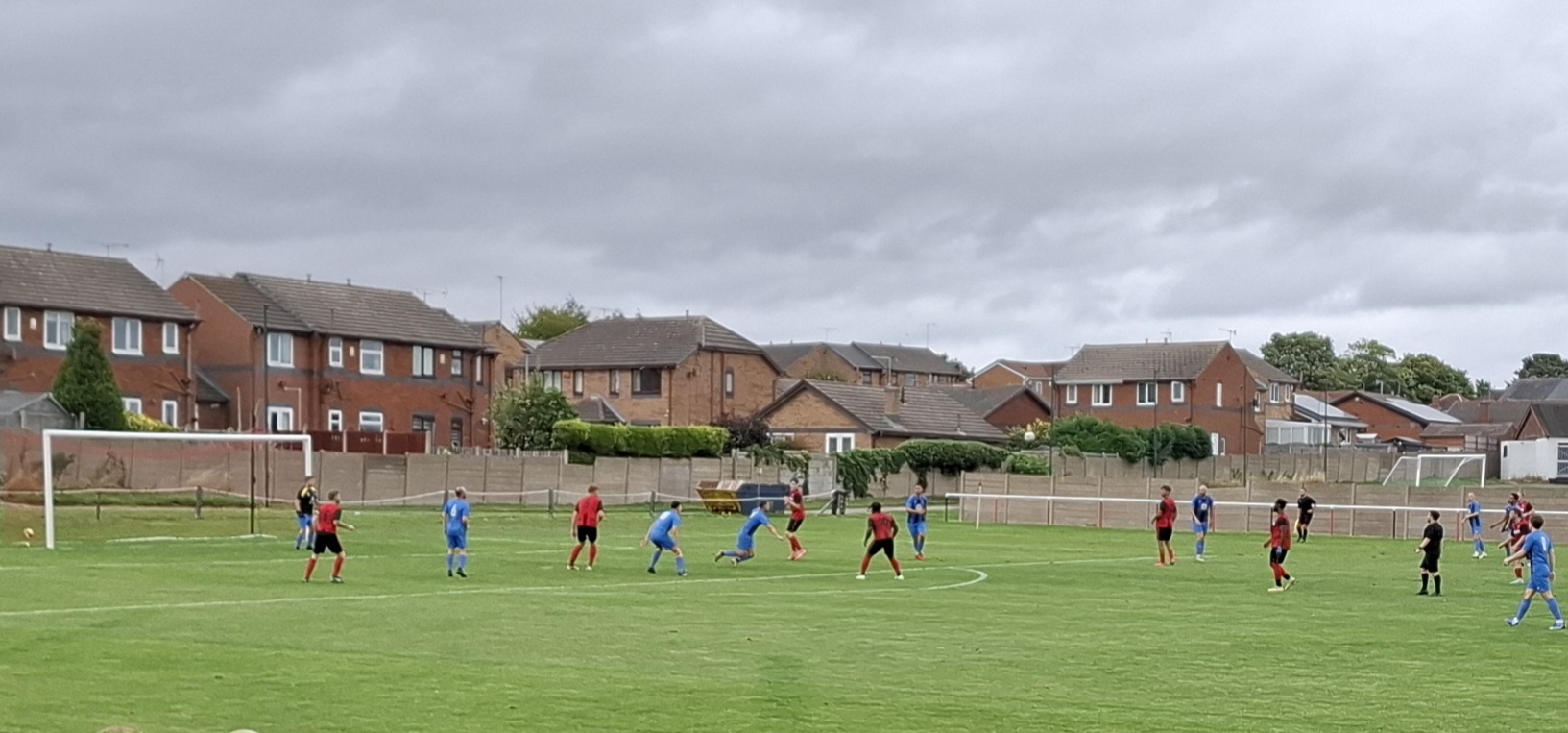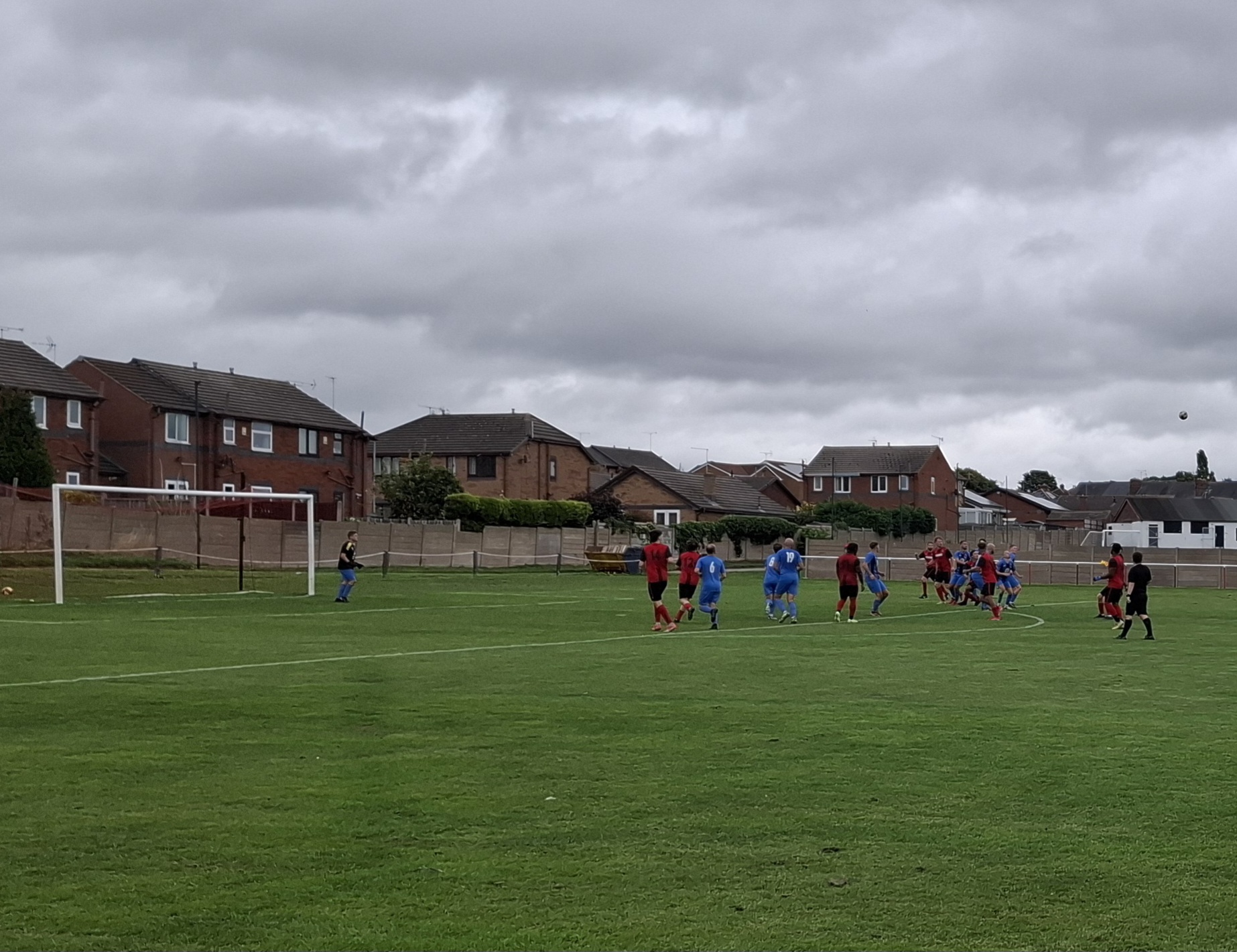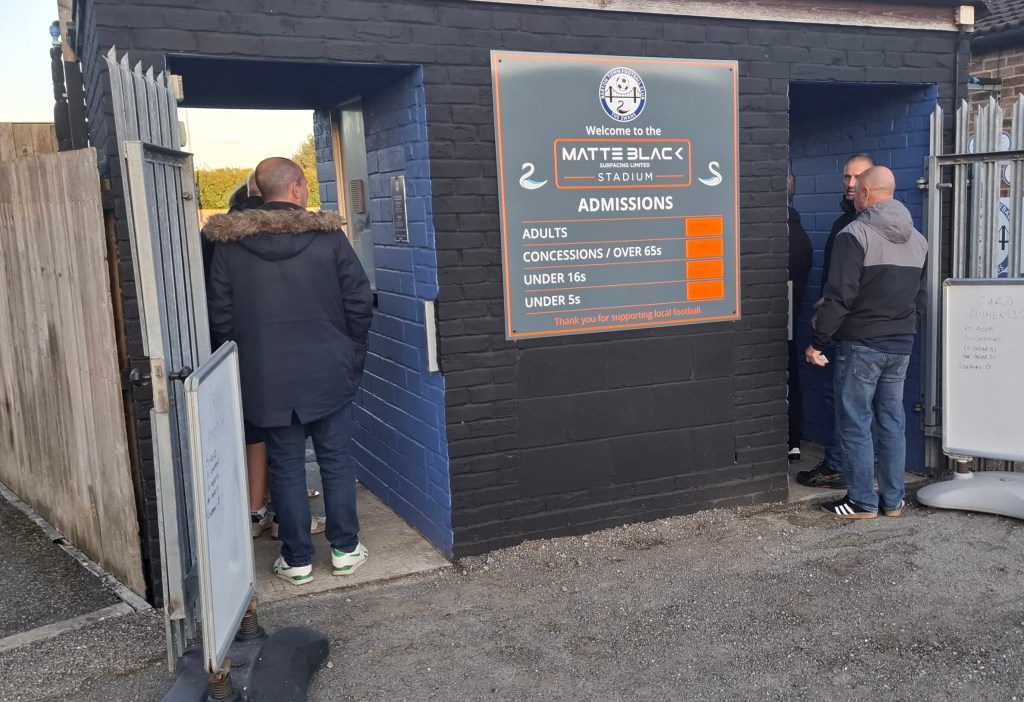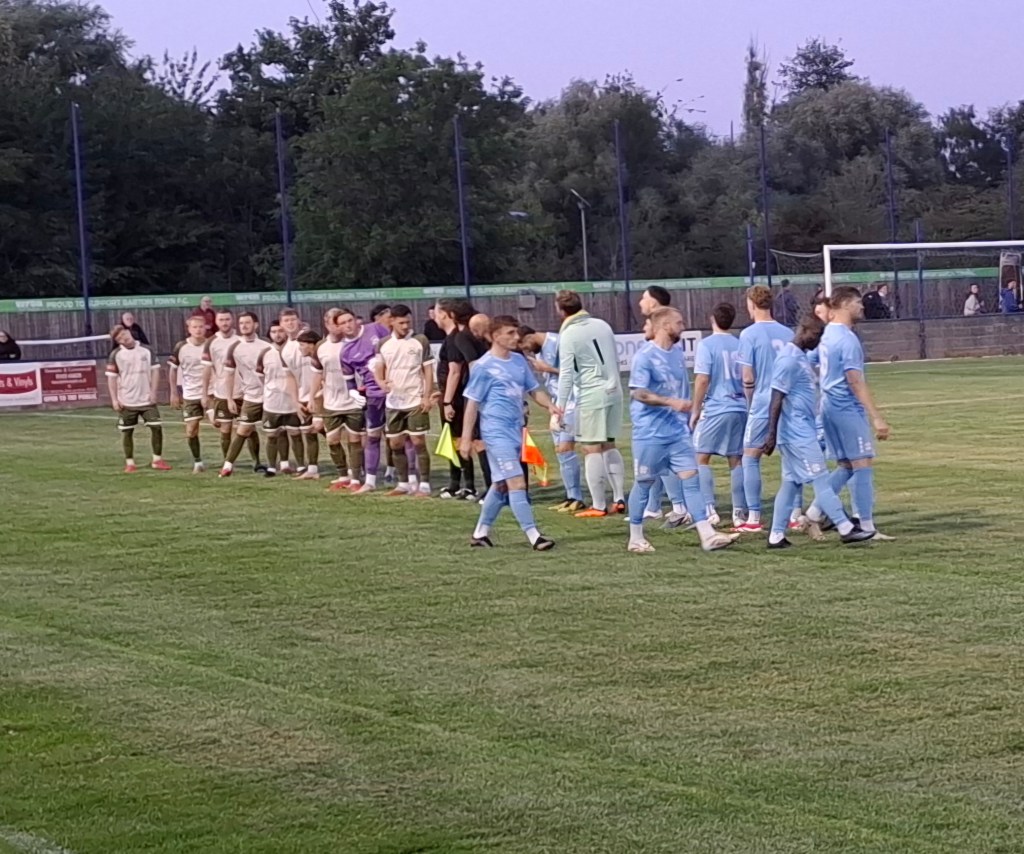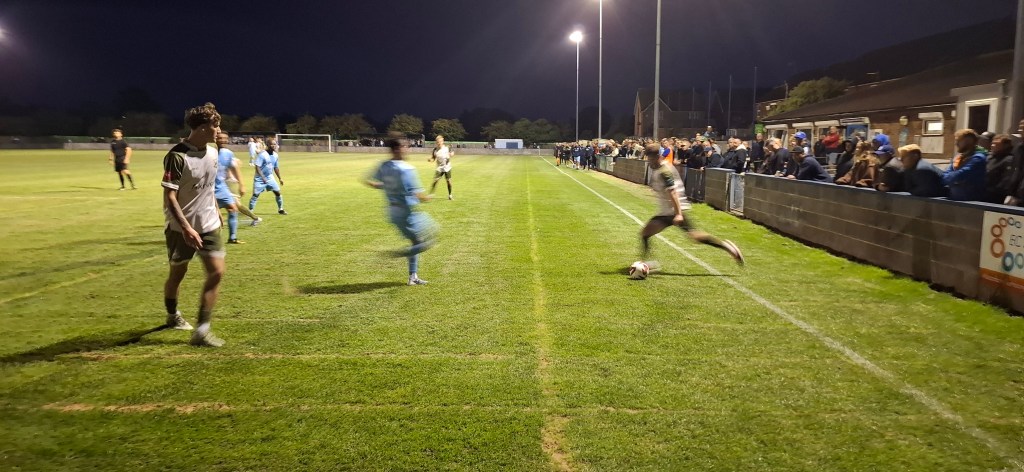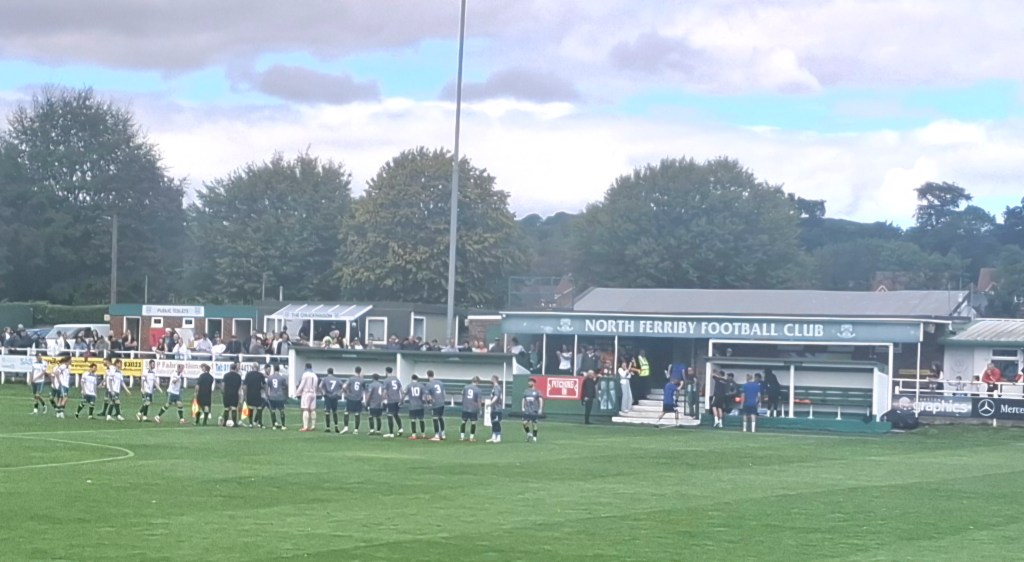

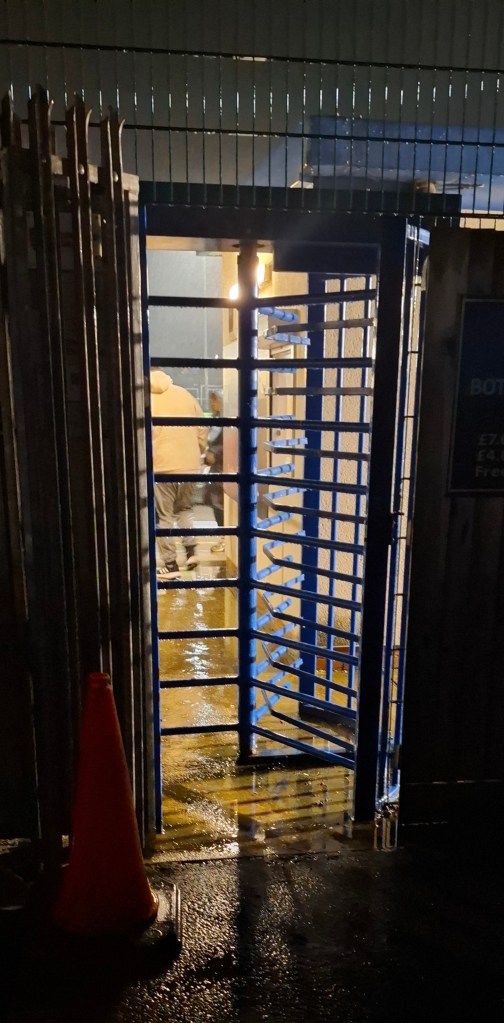
It was a true Autumn night as I drove along the M1, M18, M180, and M181, very dark and pouring with rain. I was on my way to Bottesford that is just south of Scunthorpe. As I drove down suburban roads water was pooling where falling leaves were blocking the drains. I turned into a housing estate and after a few turns I drove into a good tarmacked car park. After decking myself out in rainwear I hurried through the down poor to the ground.
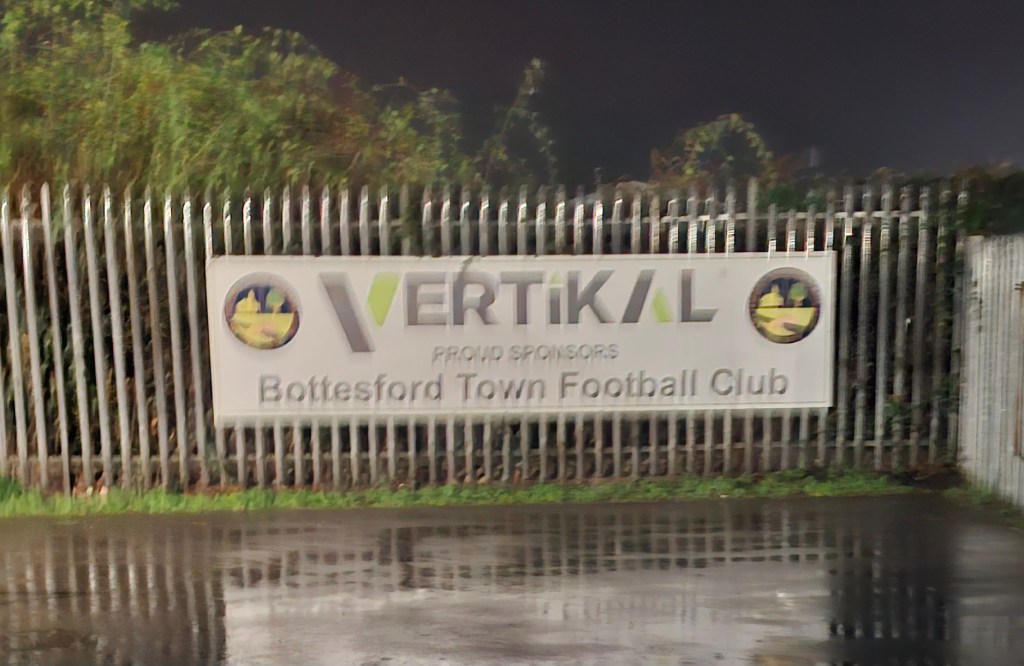
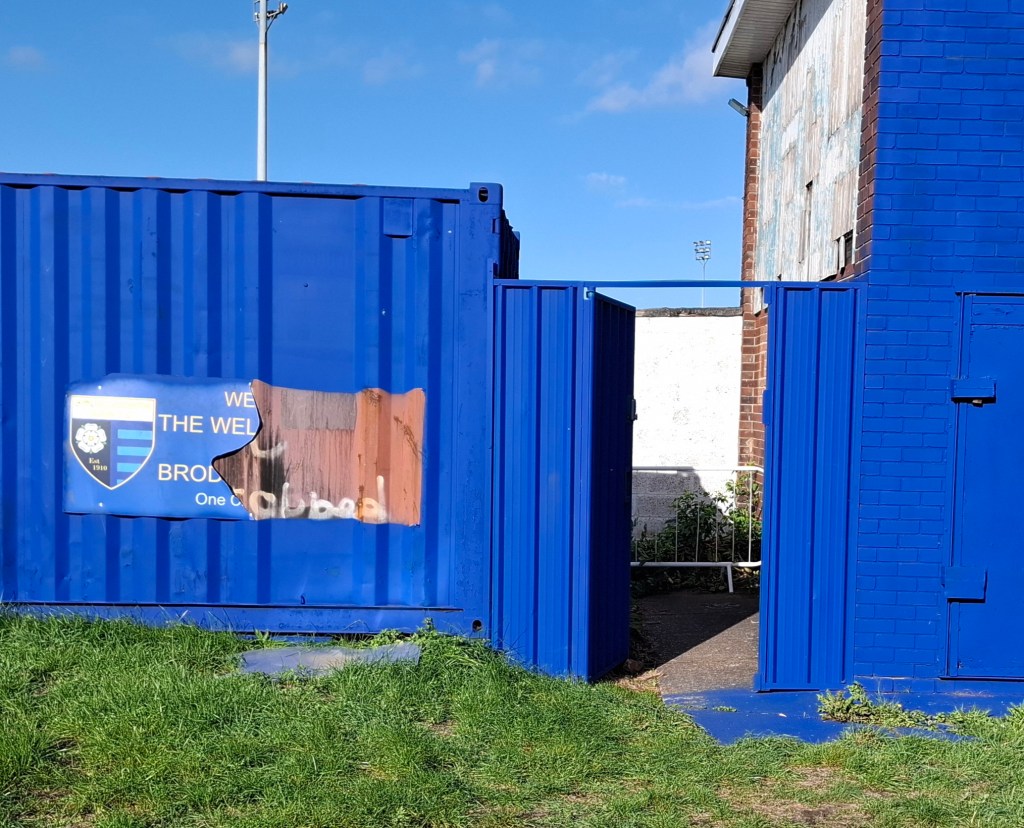
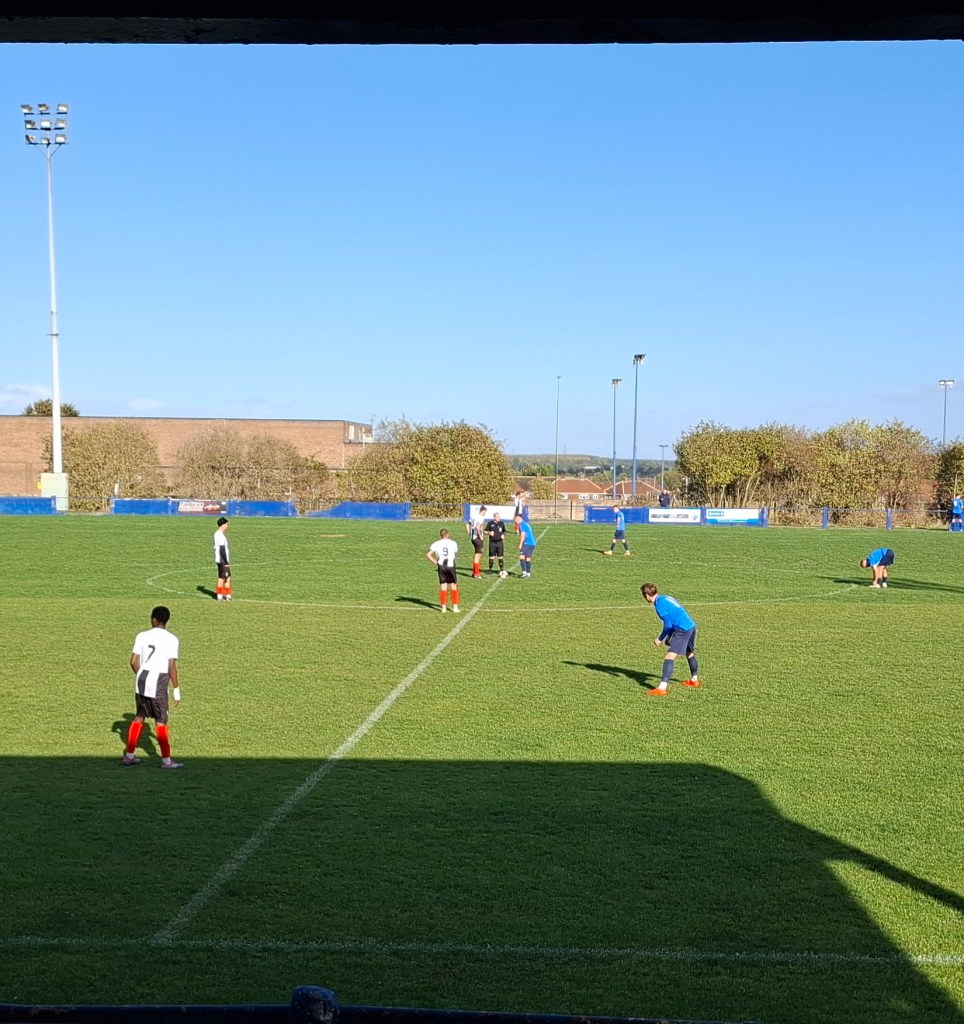
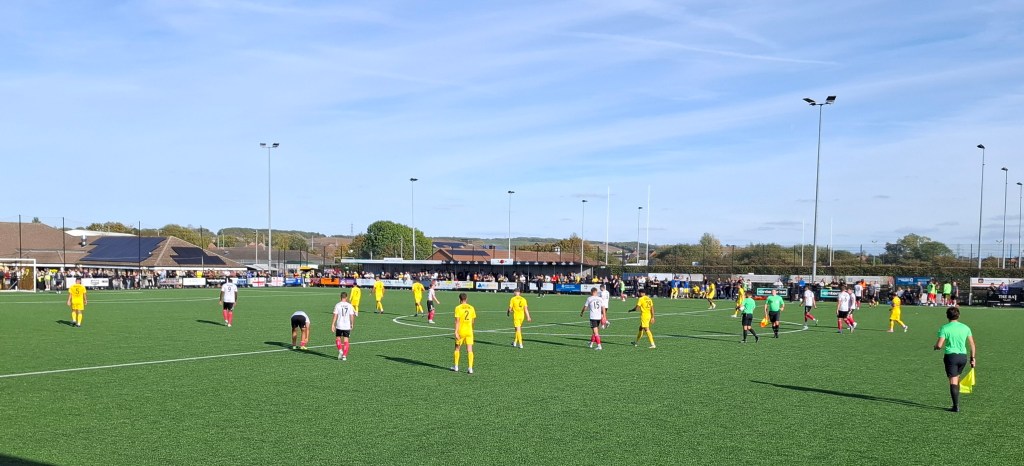
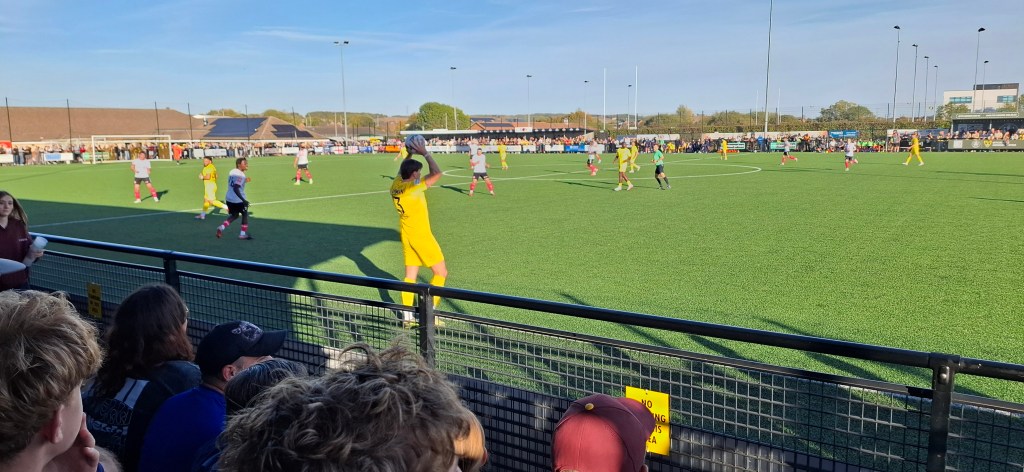
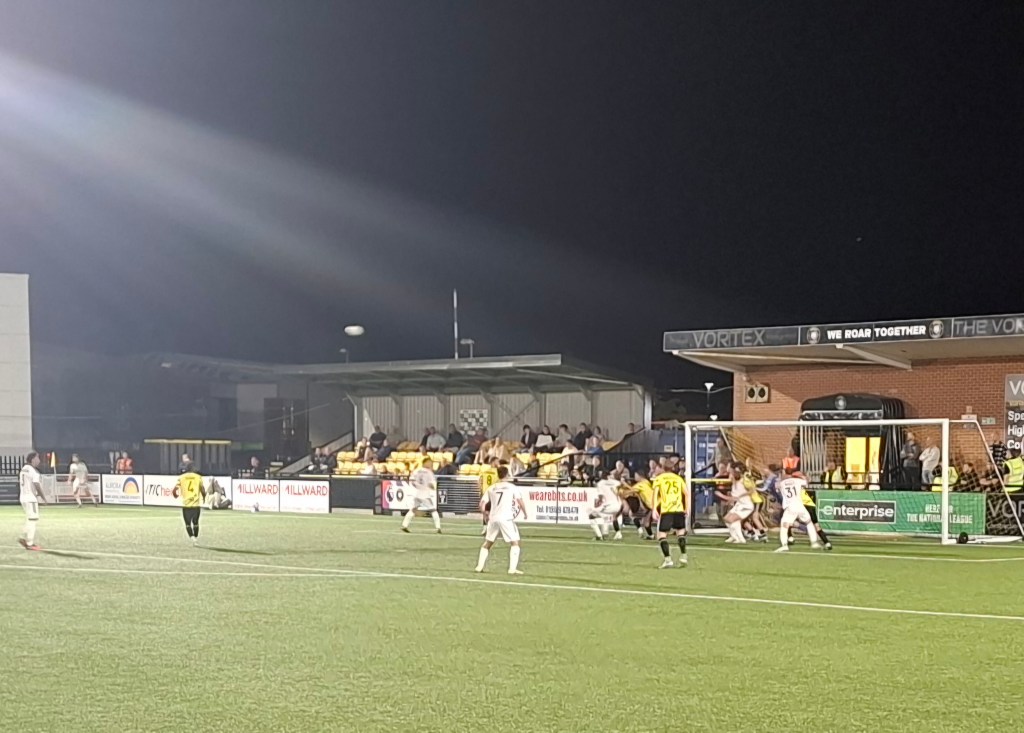
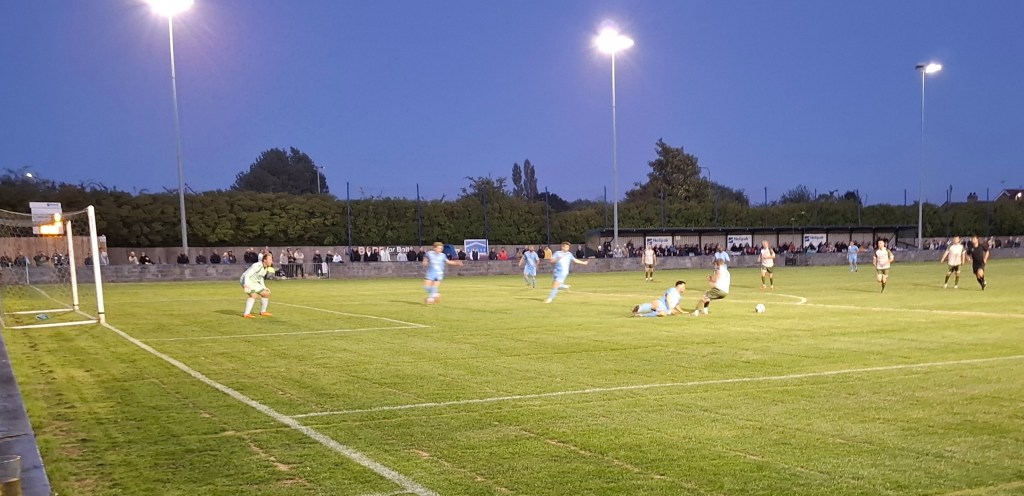
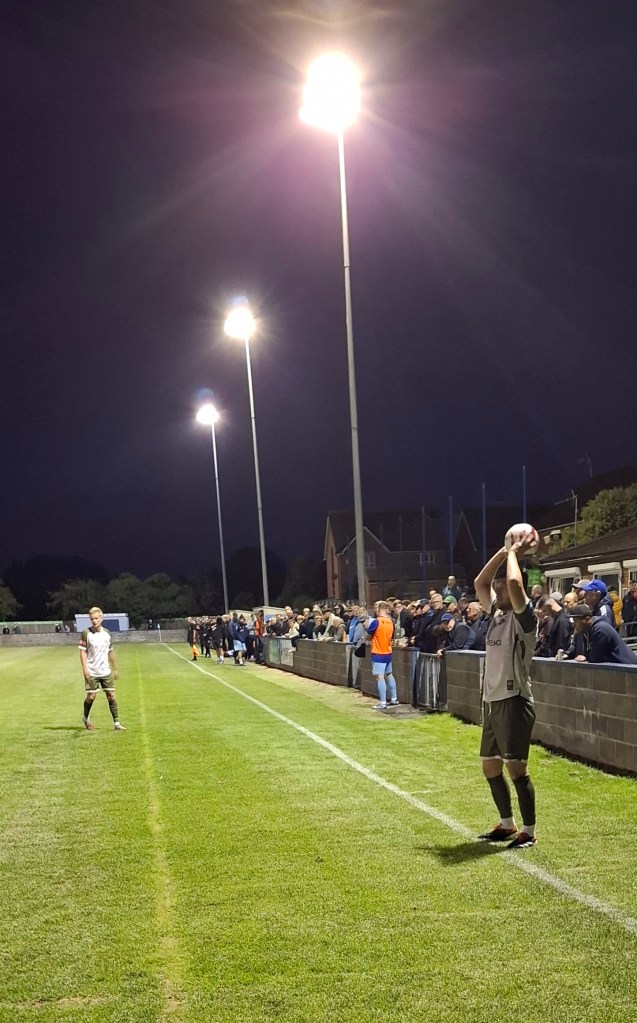
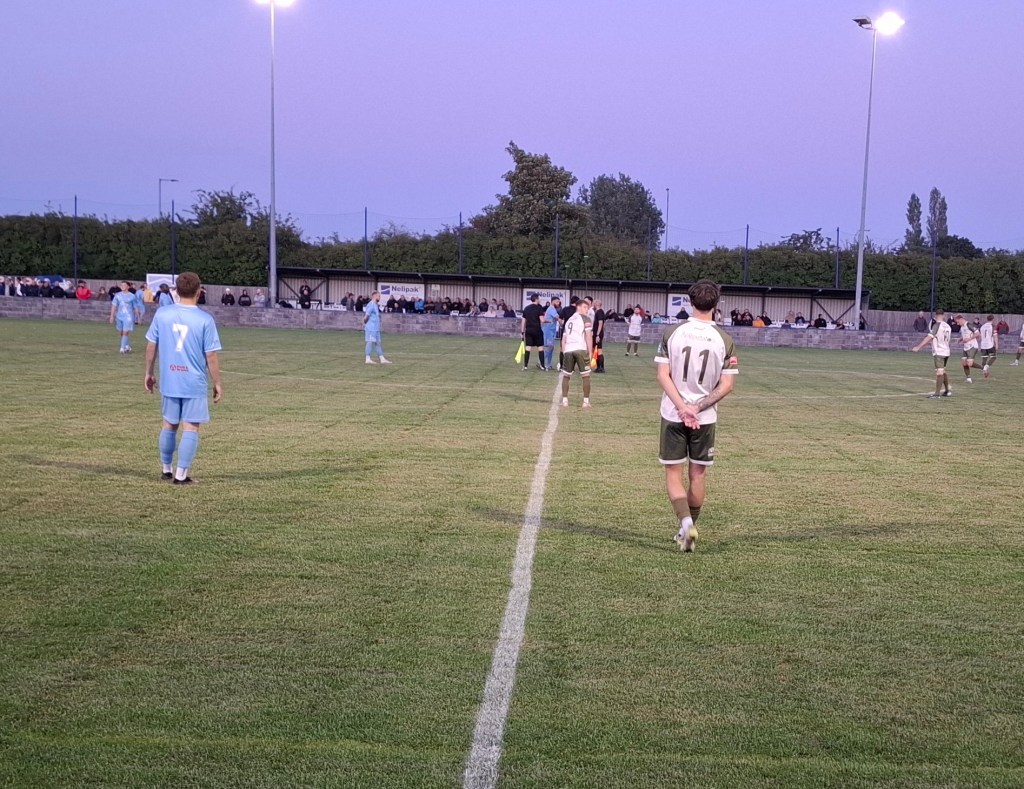
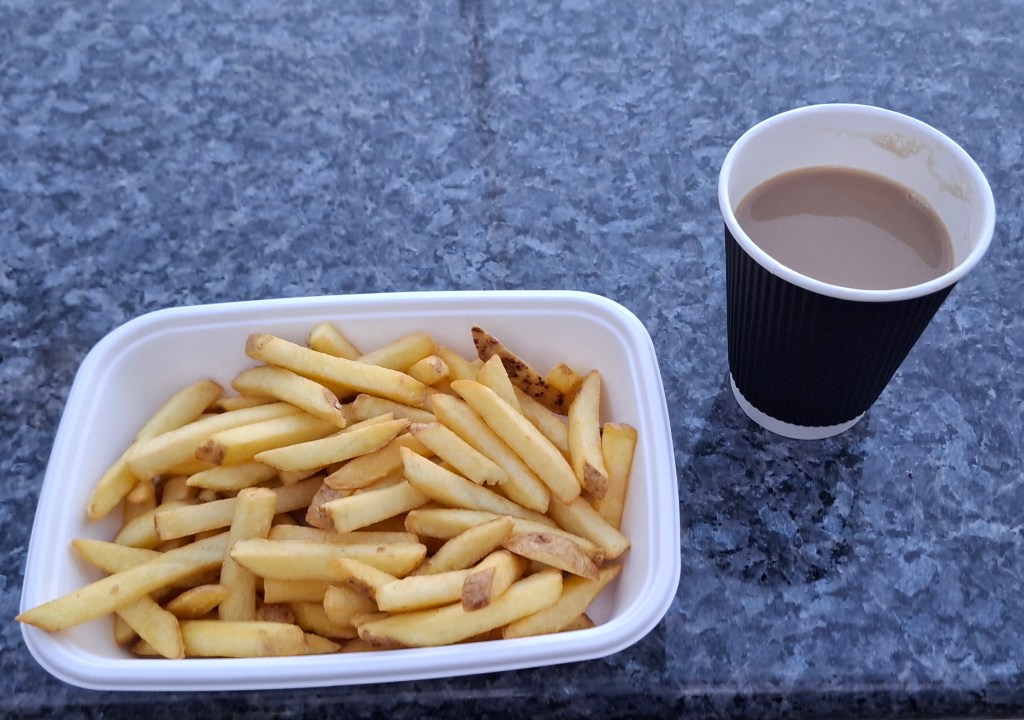
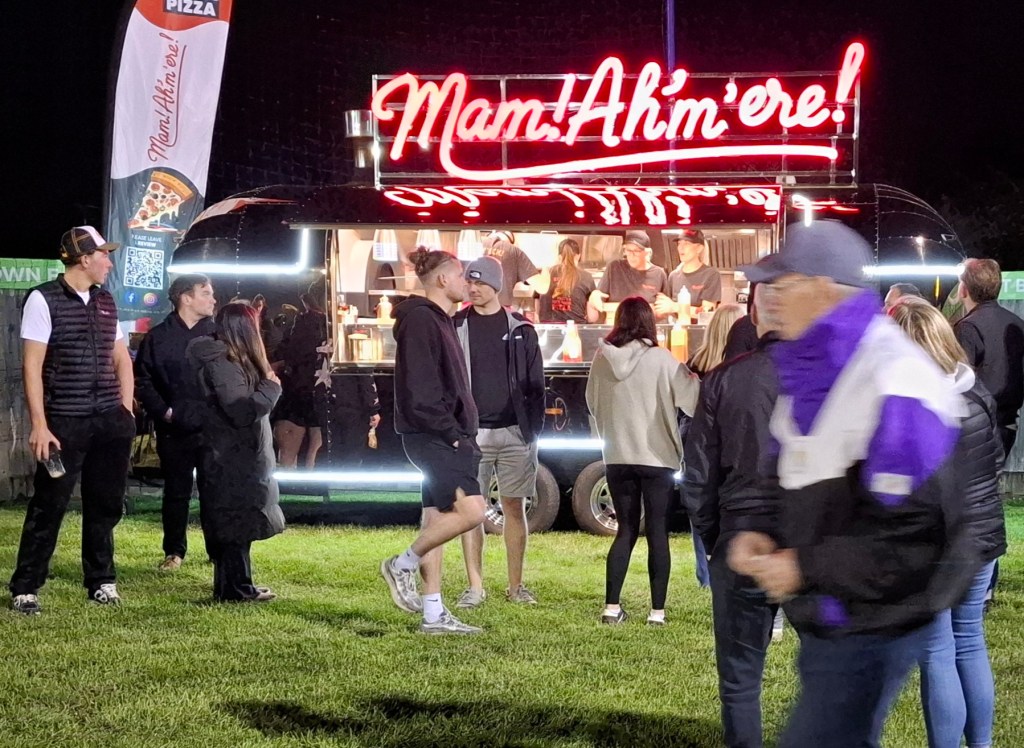
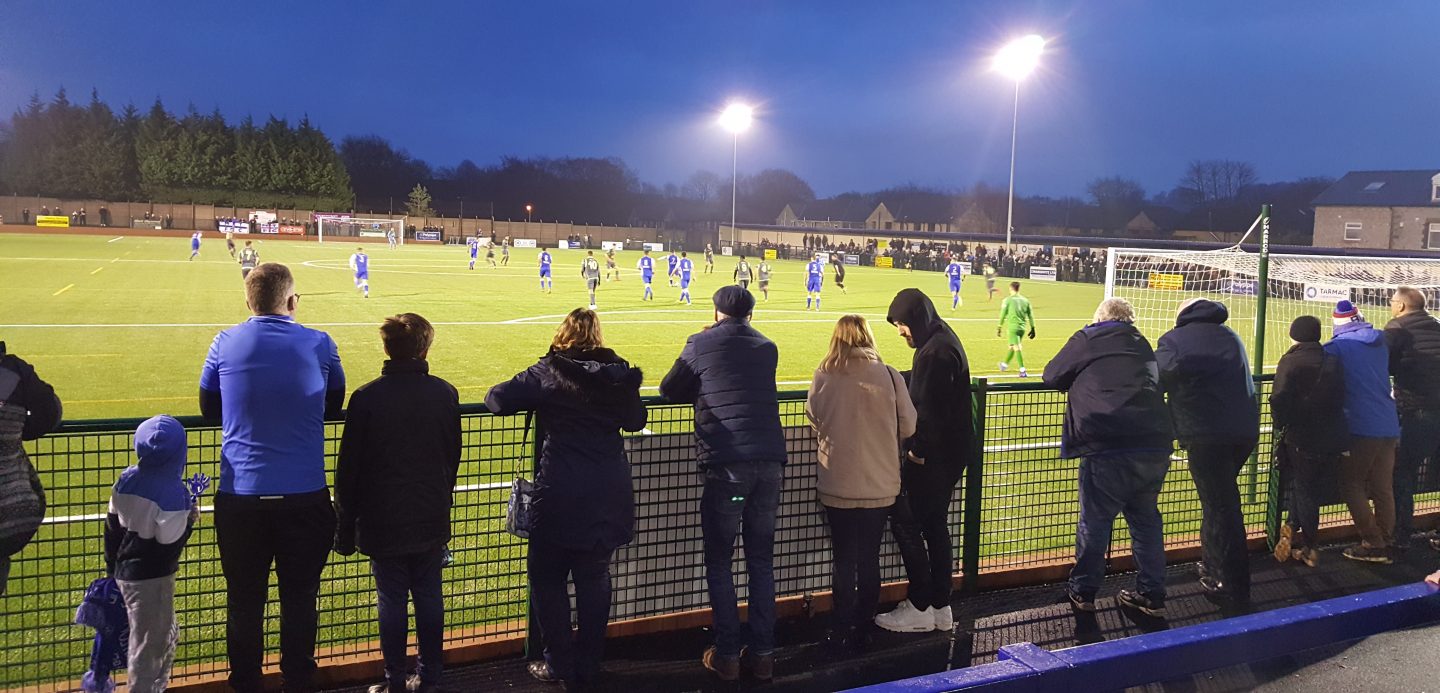
Straight away there was a kiosk, so a welcome coffee and a portion of chips were taken to a seated stand undercover. The stand stood next to a covered standing area. The other three sides are all flat hard standing around the all weather pitch and the ground was surrounded by a high fence and wall. The pitch was also marked out for junior football. The players emerged from a changing room in the corner. The temperature at 9 degrees was made more miserable by the pouring rain.
It was a evening game to enable Bottesford catch up on league games having fallen behind due to cup success.
Bottesford Town were started in 1974 and have steadily progressed through various leagues reaching the Northern Counties East Division One in 2006 and gained promotion to the Premier Division 10 years later, where they have stayed.
Tadcaster Albion AFC was named in 1923 but they are believed to have been started in 1892 under the name John Smith’s F.C. They played in local York Leagues and later in the Yorkshire League which when it was reorganised in 1983 as the Northern Counties East League they became founder members.
Bottesford Town F.C. 2 Tadcaster Albion AFC 2
Tuesday 20th October 2026 19.45 pm kick off
Bottesford Town FC, Birch Park, Ontario Road, Scunthorpe, North Lincolnshire, DN17 2TQ
Northern Counties East League, Premier Division
The Poachers v The Brewers 2nd v 18th
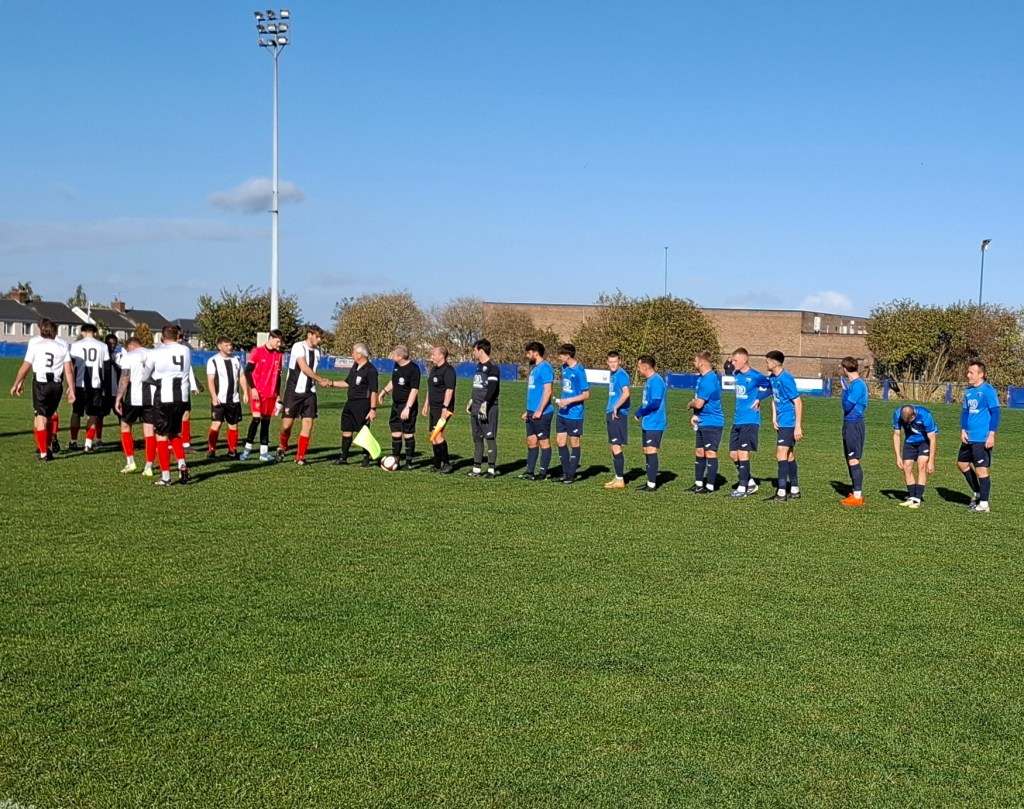
Bottesford Town; All royal blue strip with a yellow diagonal stripe across the front and back of the shirts, goalkeeper in all green.
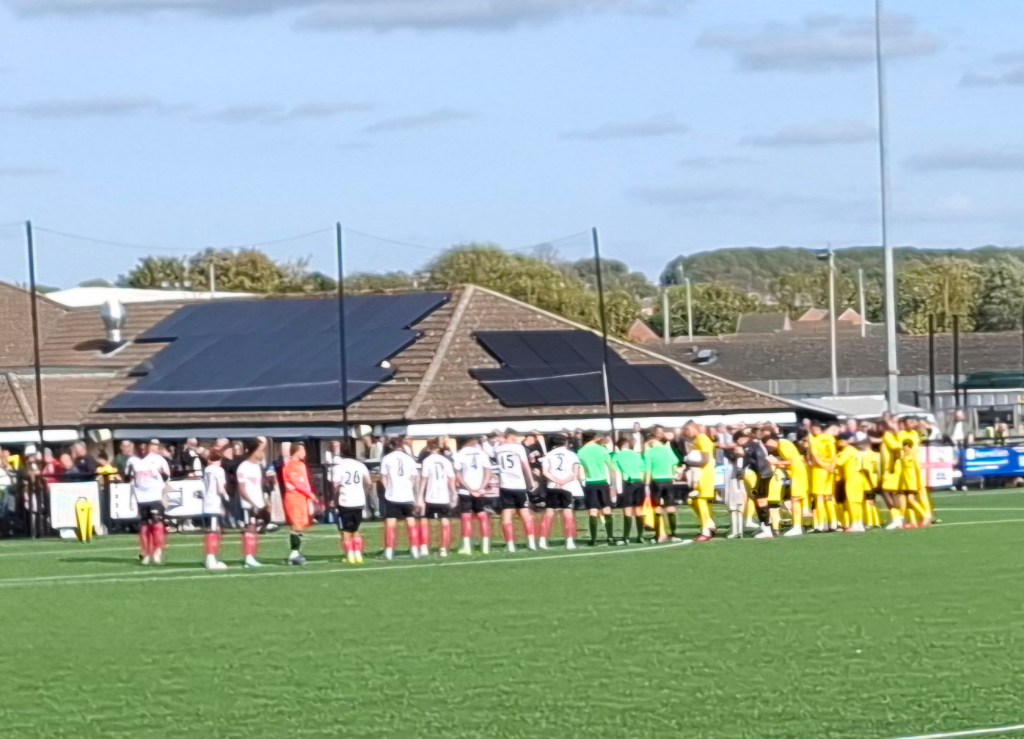
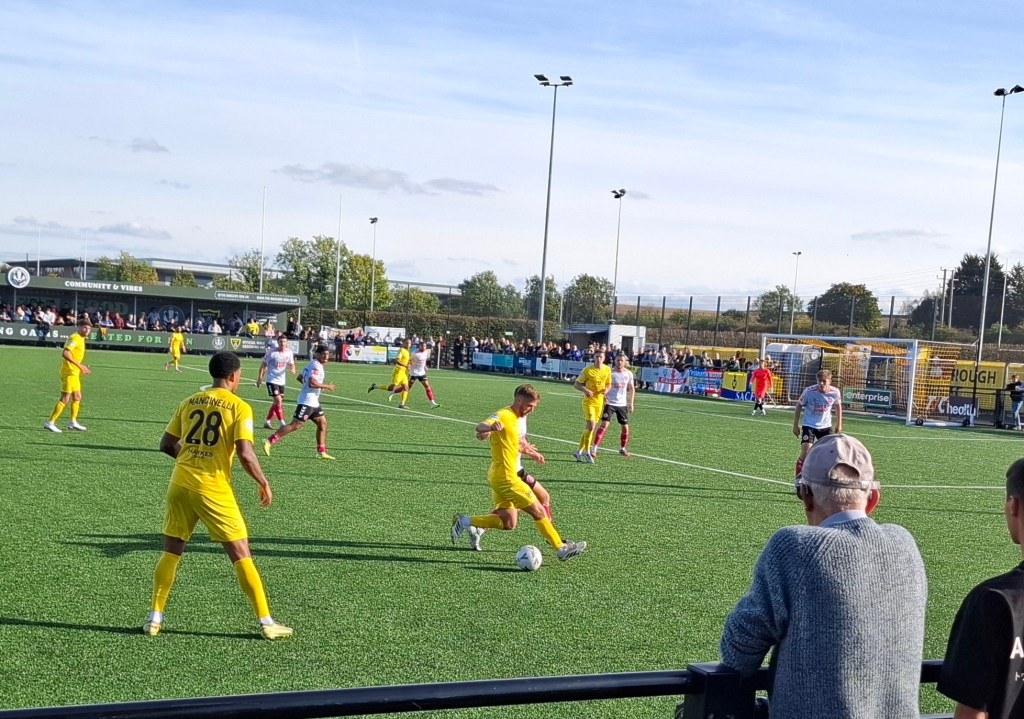
Tadcaster Albion; Yellow shirts with black collard and side stripe, black shorts, goalkeeper in all pink.
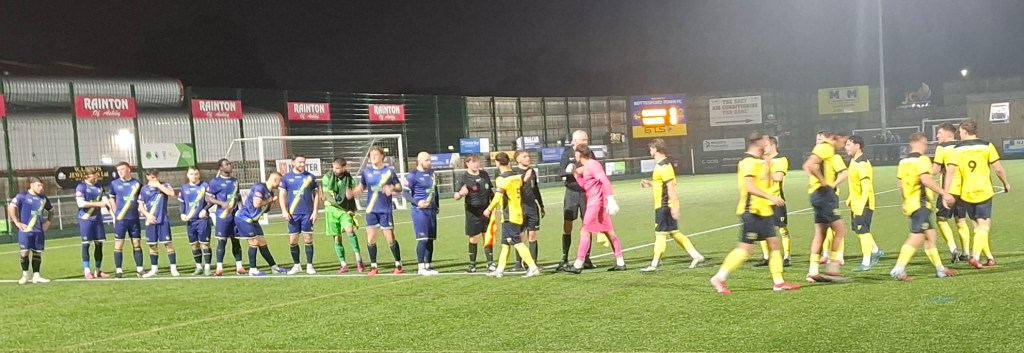
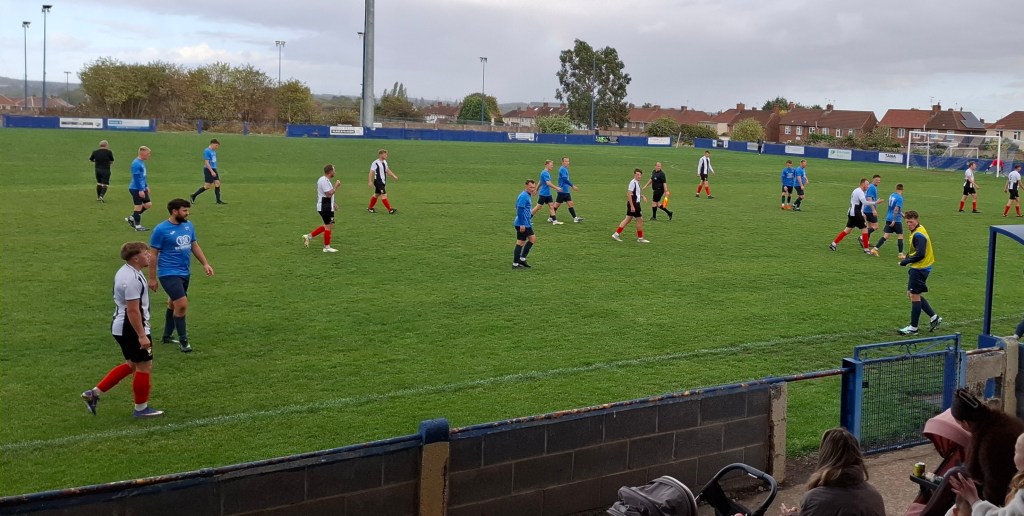
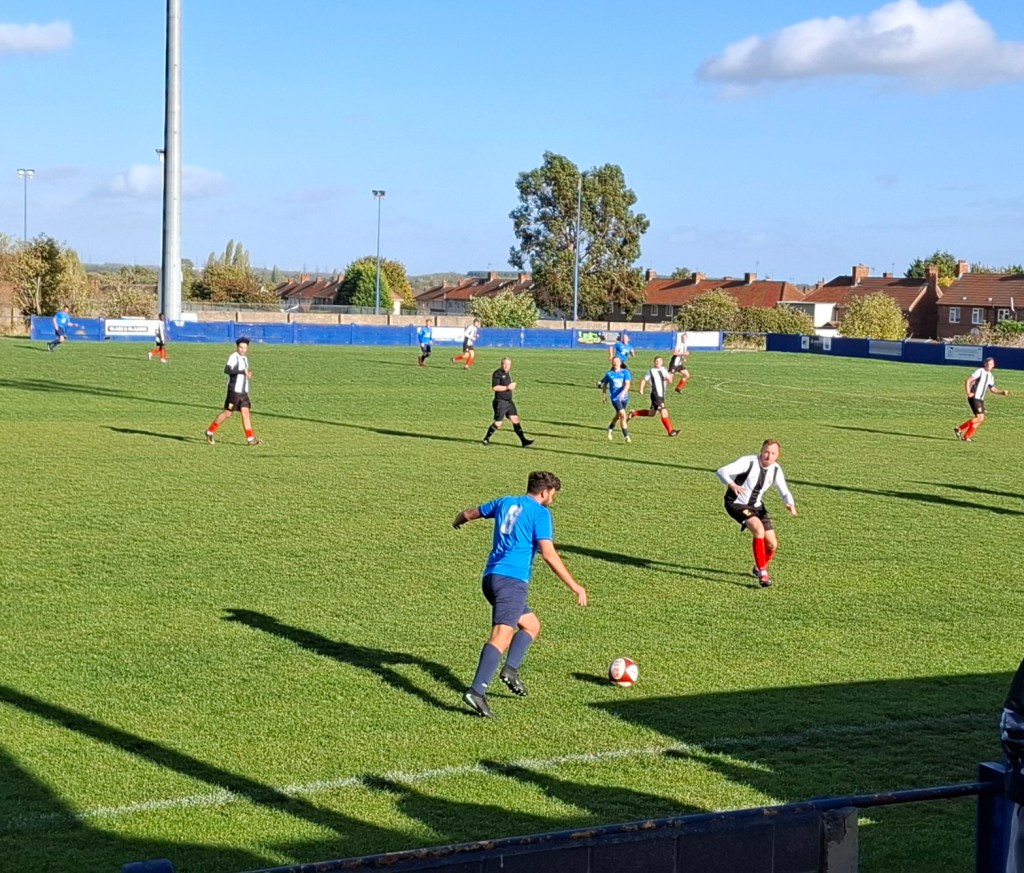
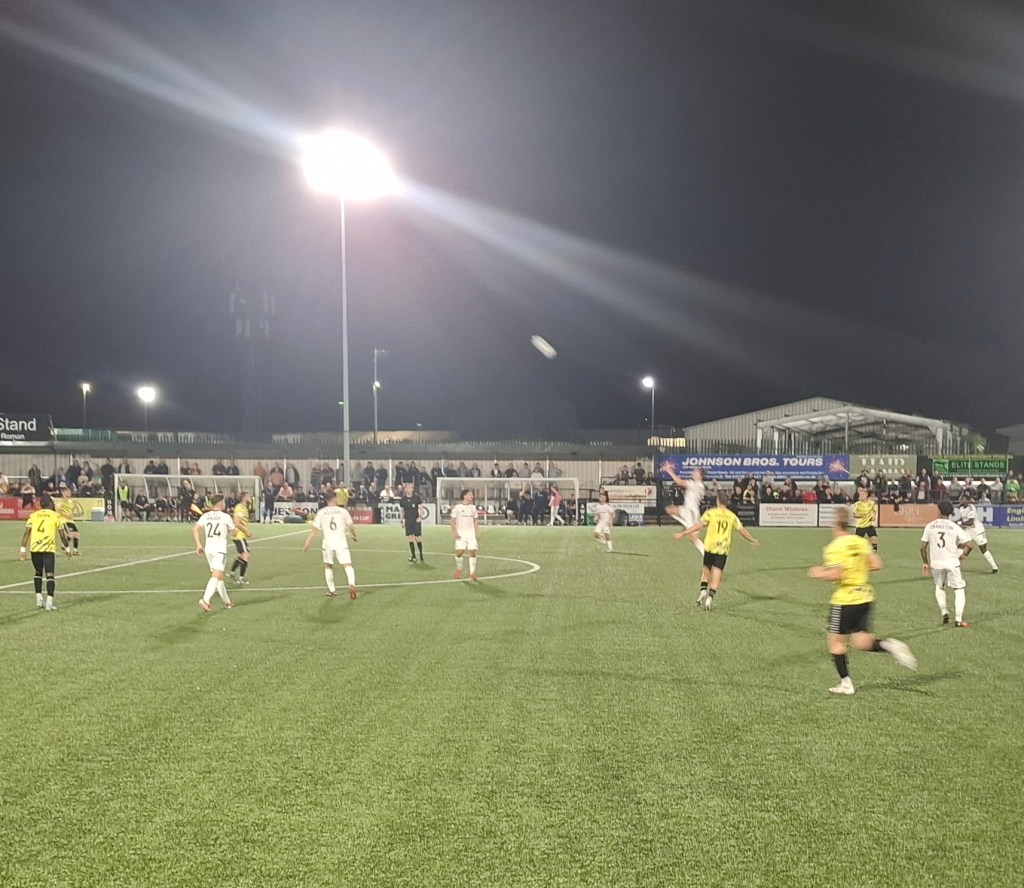
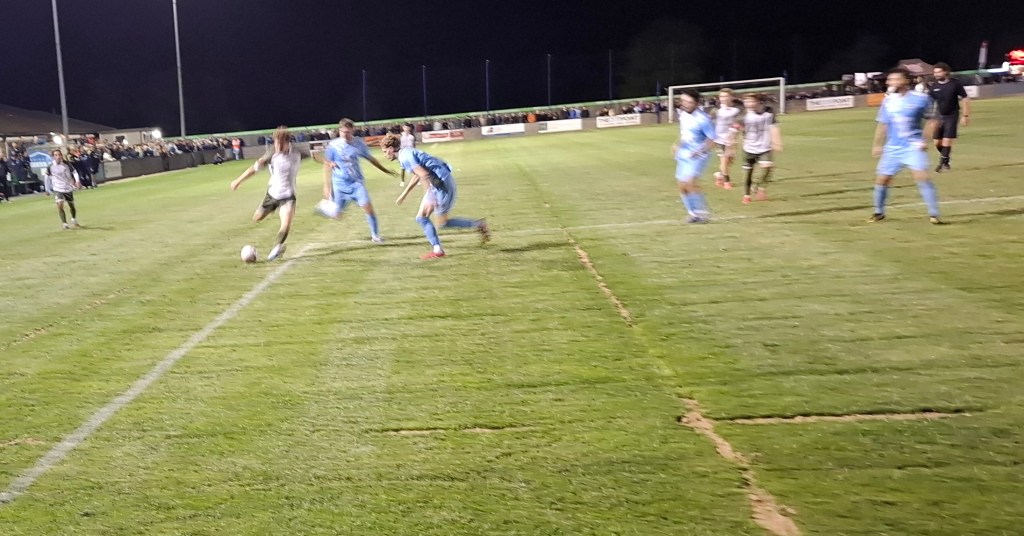
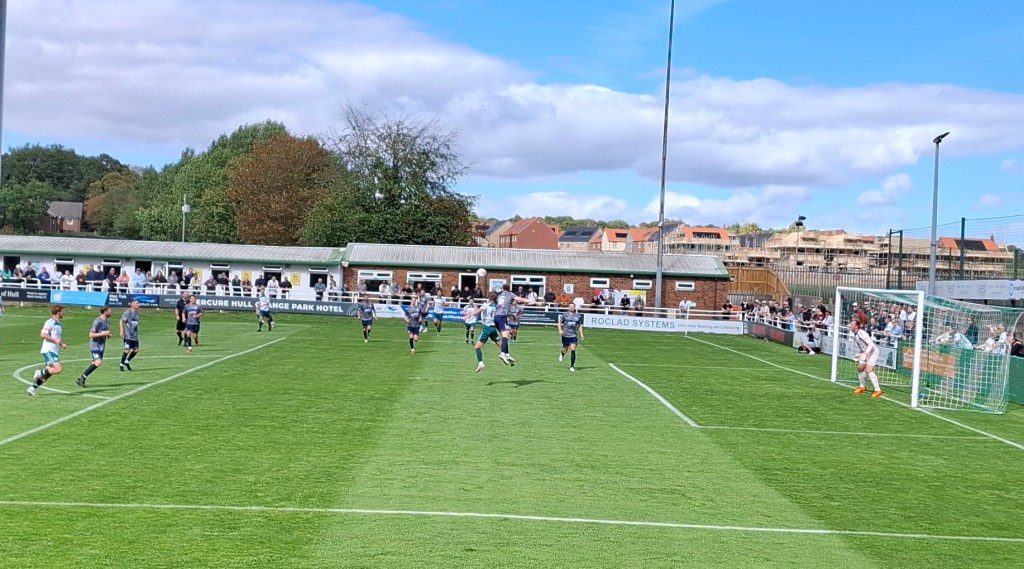
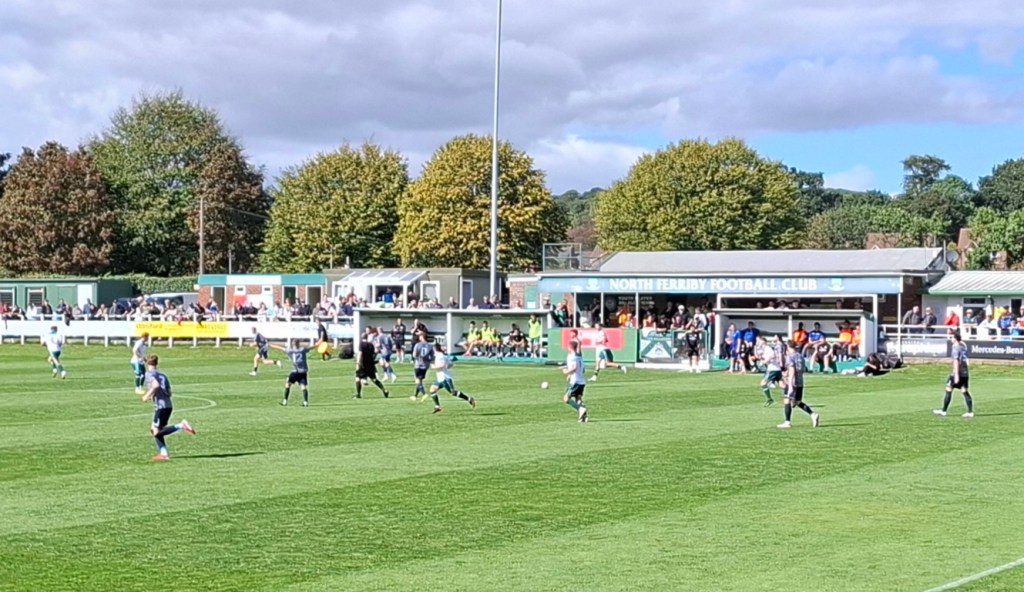
Despite the constant rain both sides set off at a blistering pace with Tadcaster mastering the conditions better through keeping the ball on the ground and quick play down the wings. They were rewarded on 20 minutes when Oliver Green received the ball on the edge of the goal area. ran forward without being challenged by the three Baottesford defenders and coolly hit the ball into the net to the right of the goalkeeper. The constant rain seemed to almost end on the scoring of the goal although it did continue to lightly drizzle.
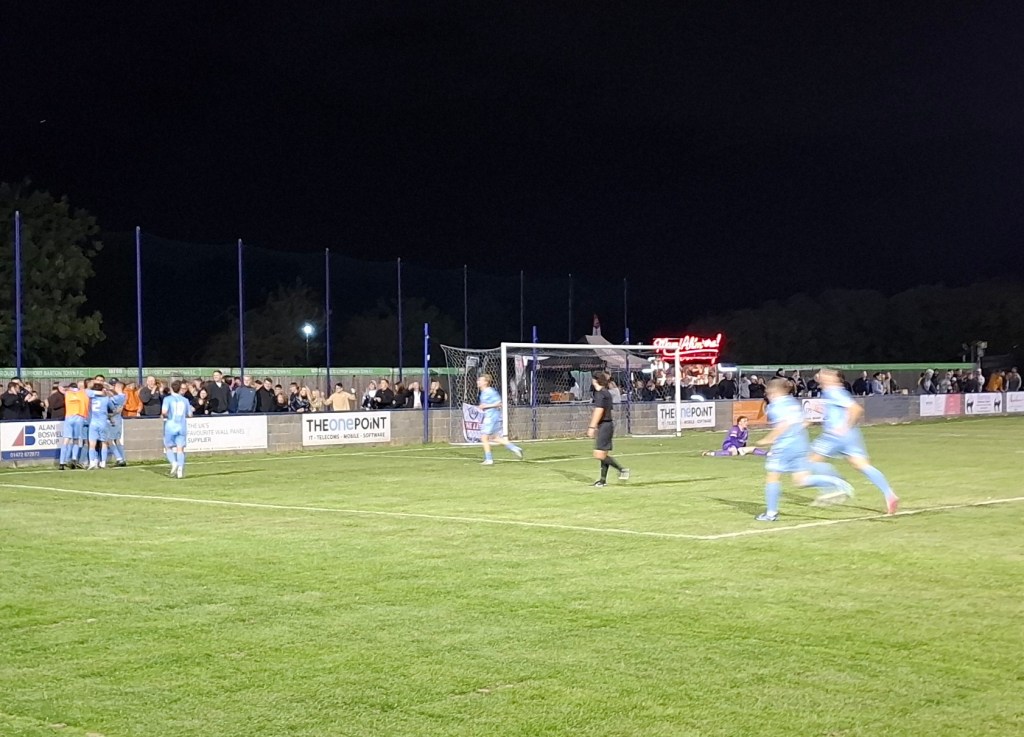
The home team pushed to equalise but were still being harassed by Albion. After their best inter passing move of the match the ball fell to Owen Vincent on the left and he scored by hitting the ball from a difficult angle into the far corner. Half time came soon after, with all to play for.
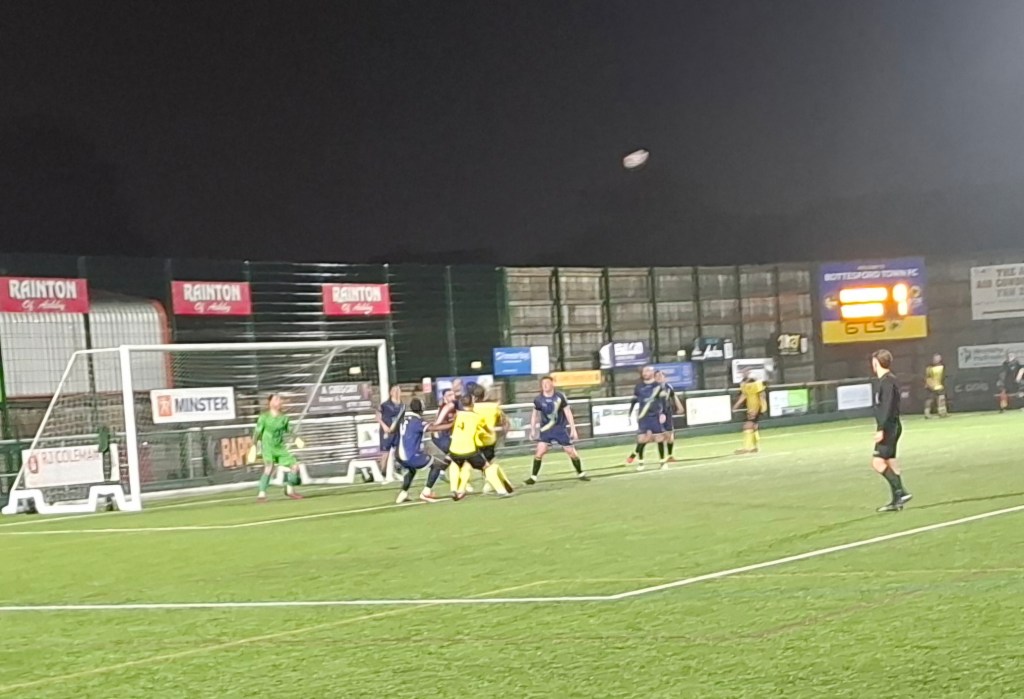
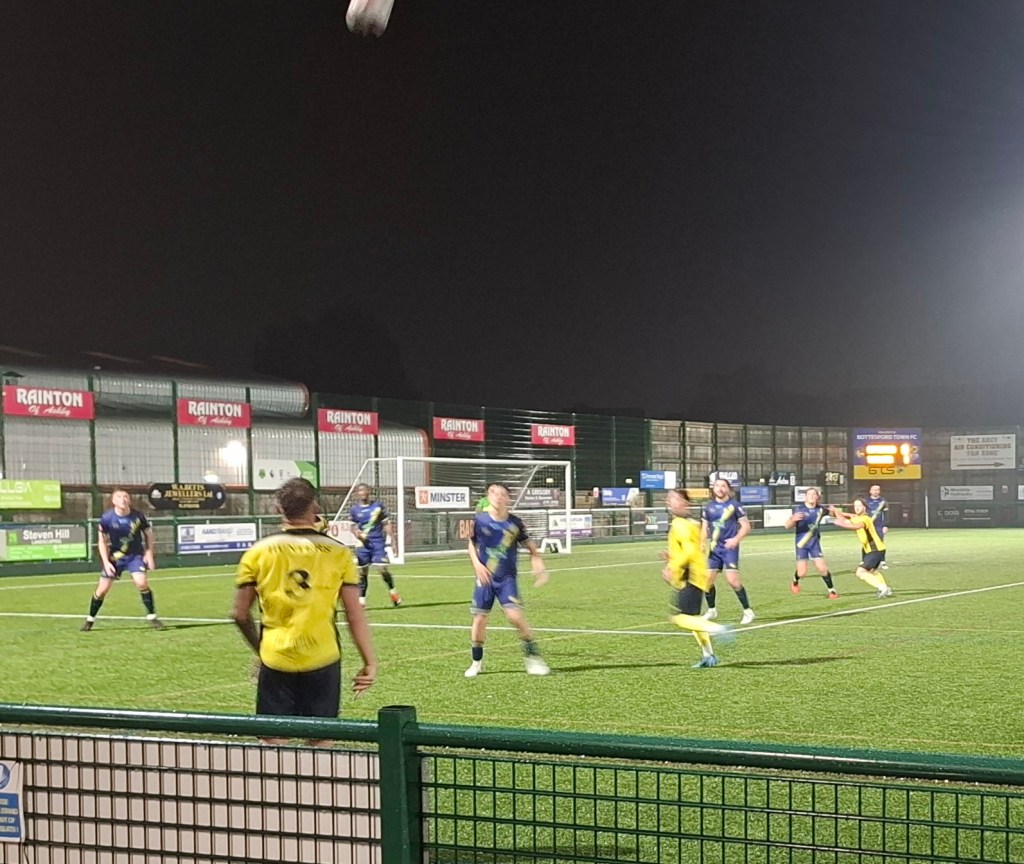
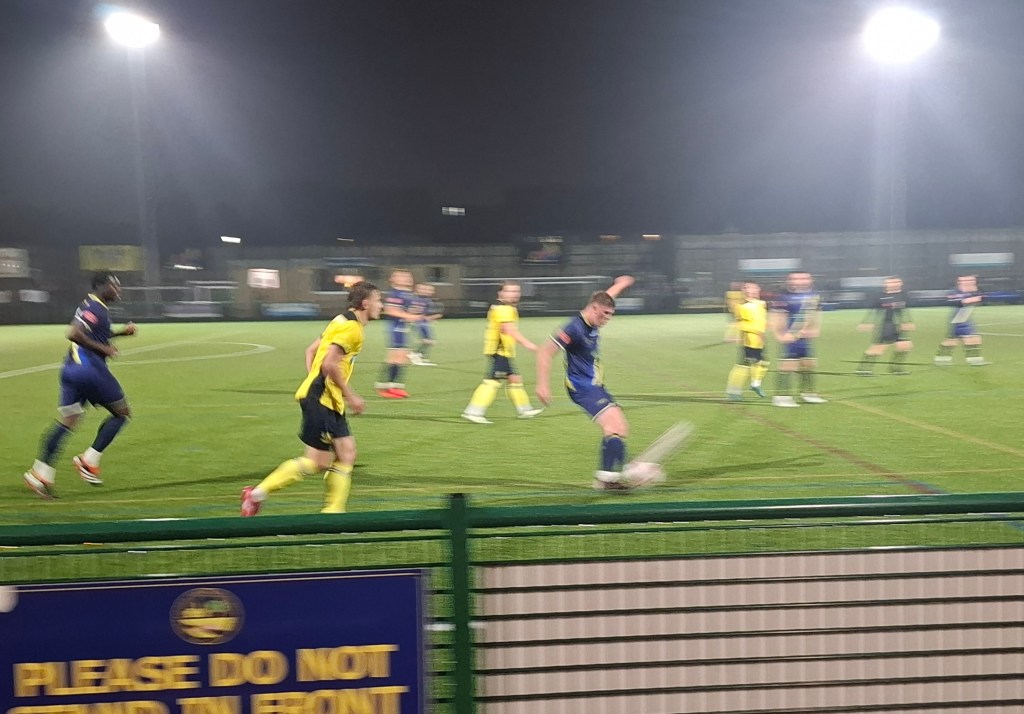
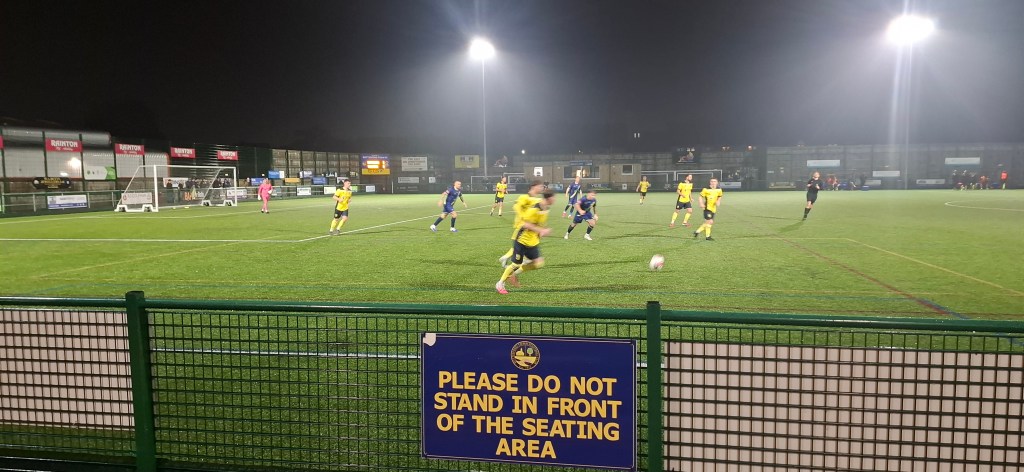
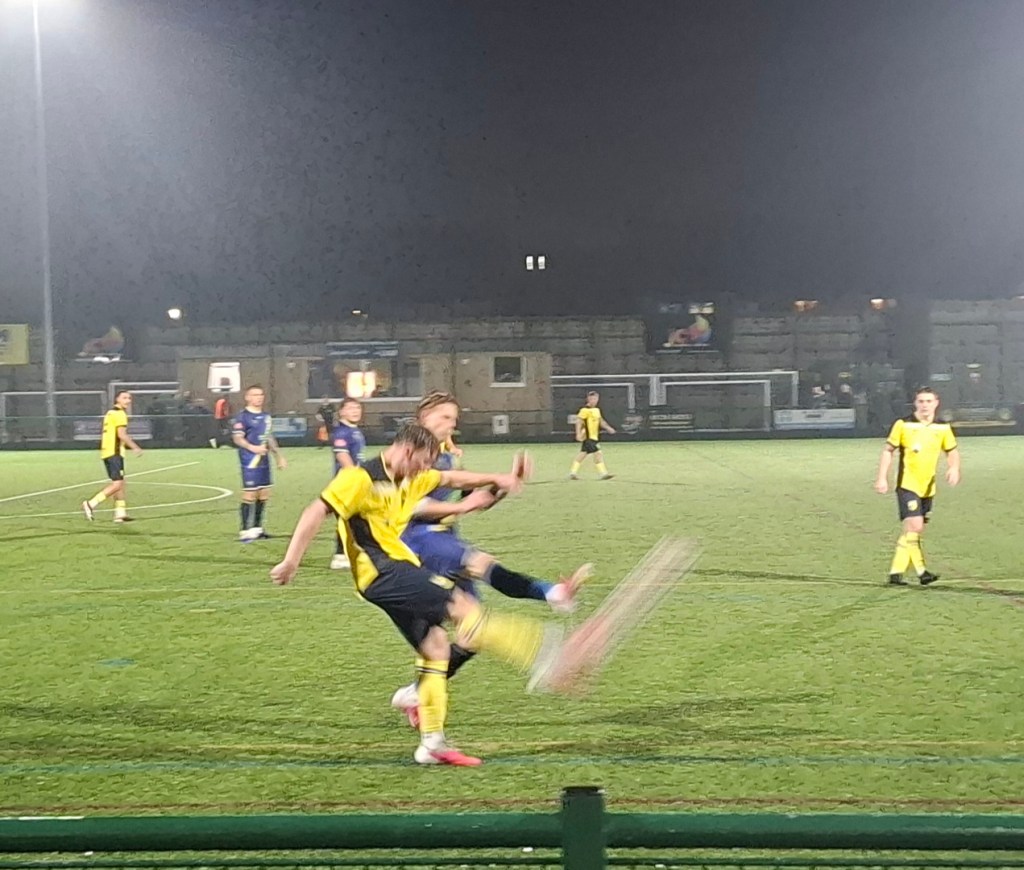
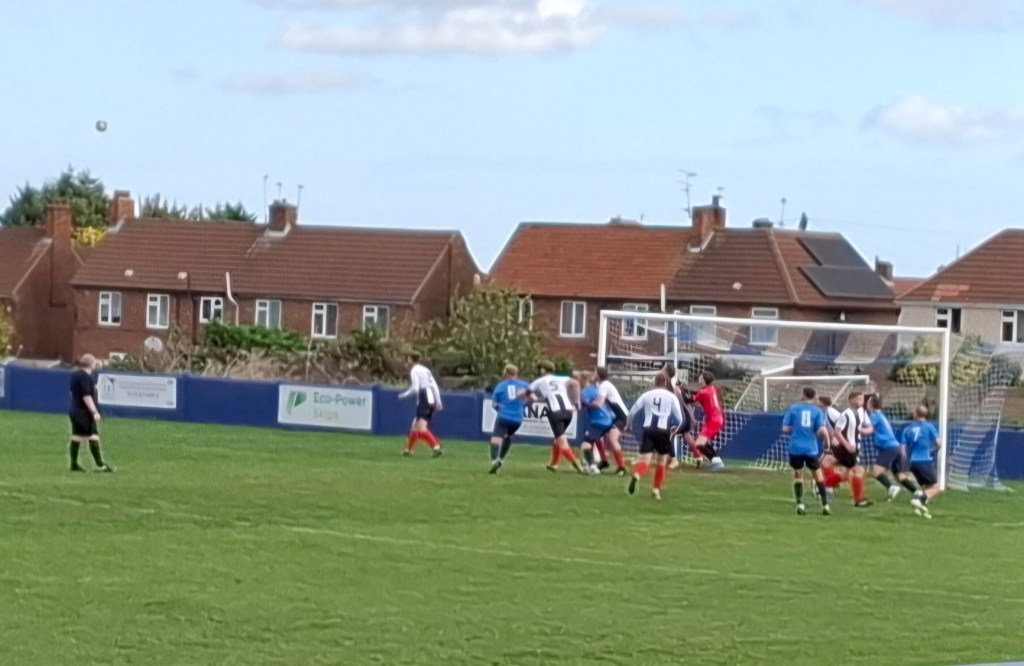
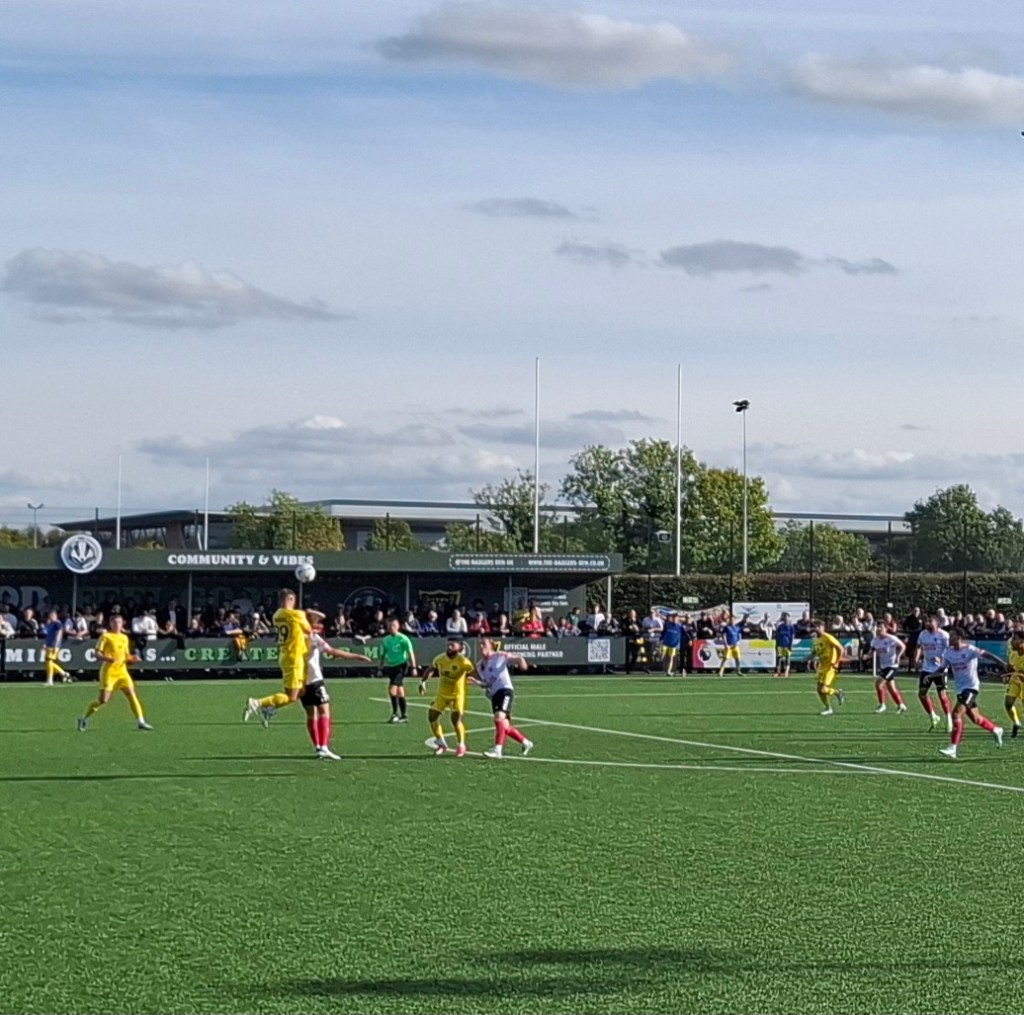
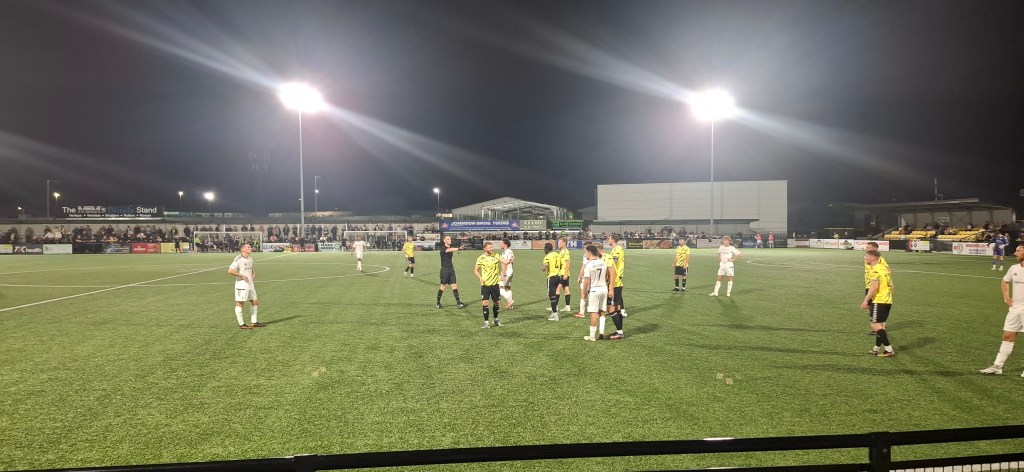
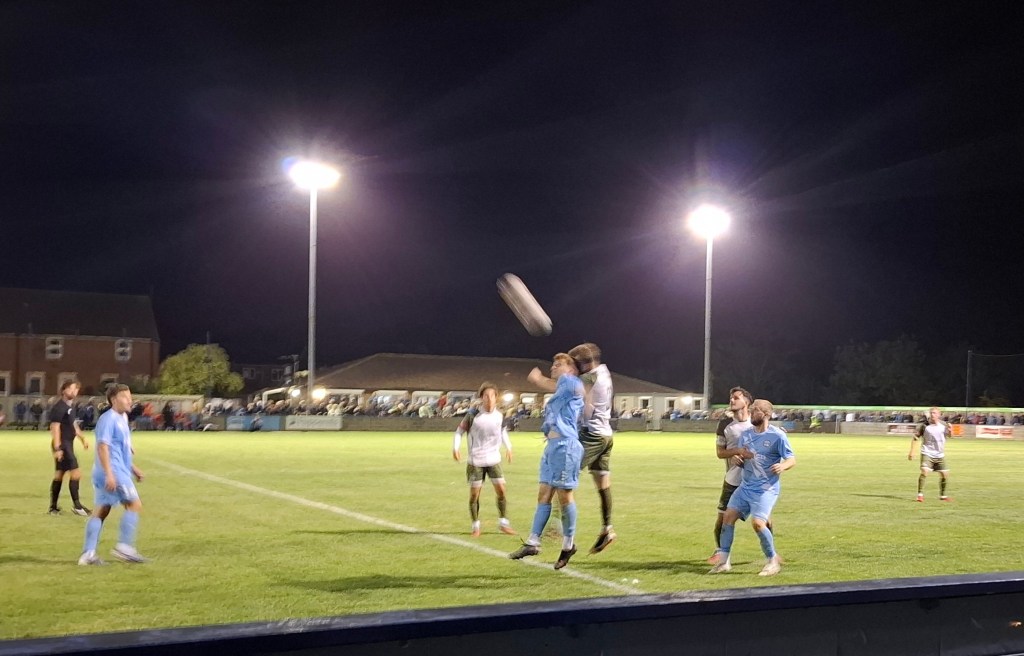
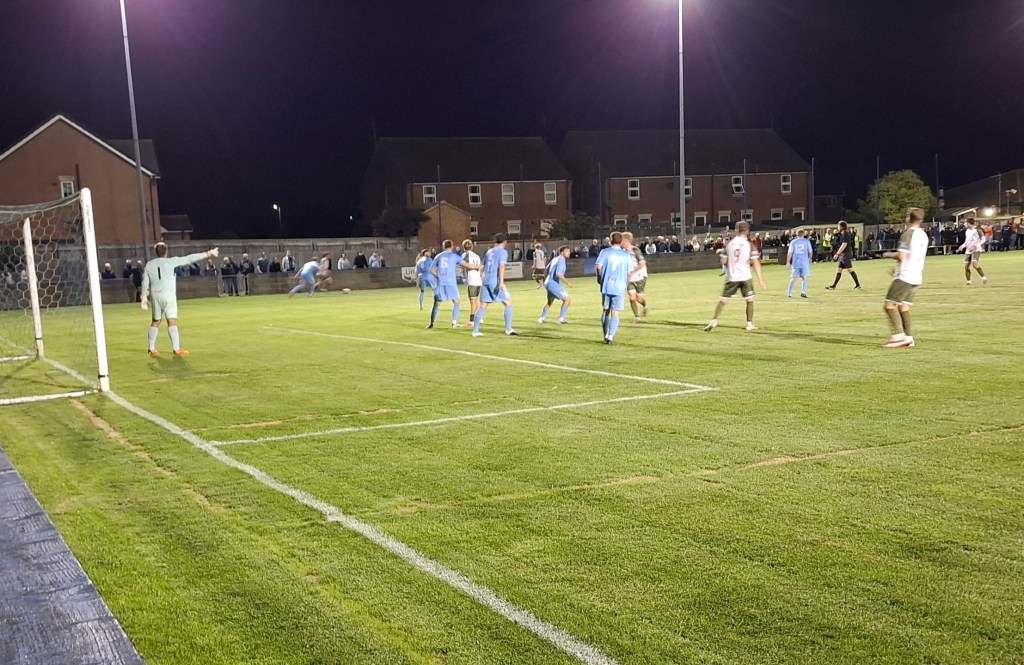
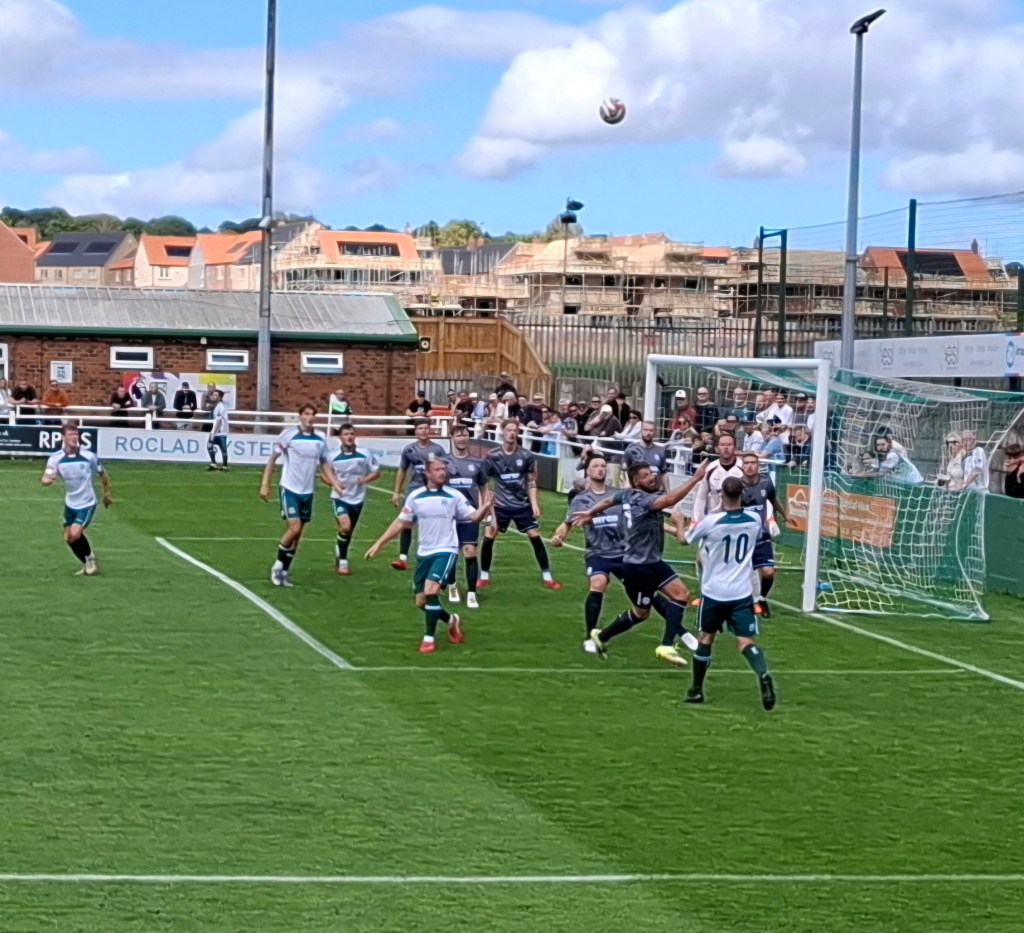
With 8 minutes gone of the second half, a shout for a penalty for Tadcaster was too vociferous by Oli Norman who was sin binned. This gave the home team the advantage which they took advantage of when Henry Moore rose at the back post to head home a well delivered corner from the right,
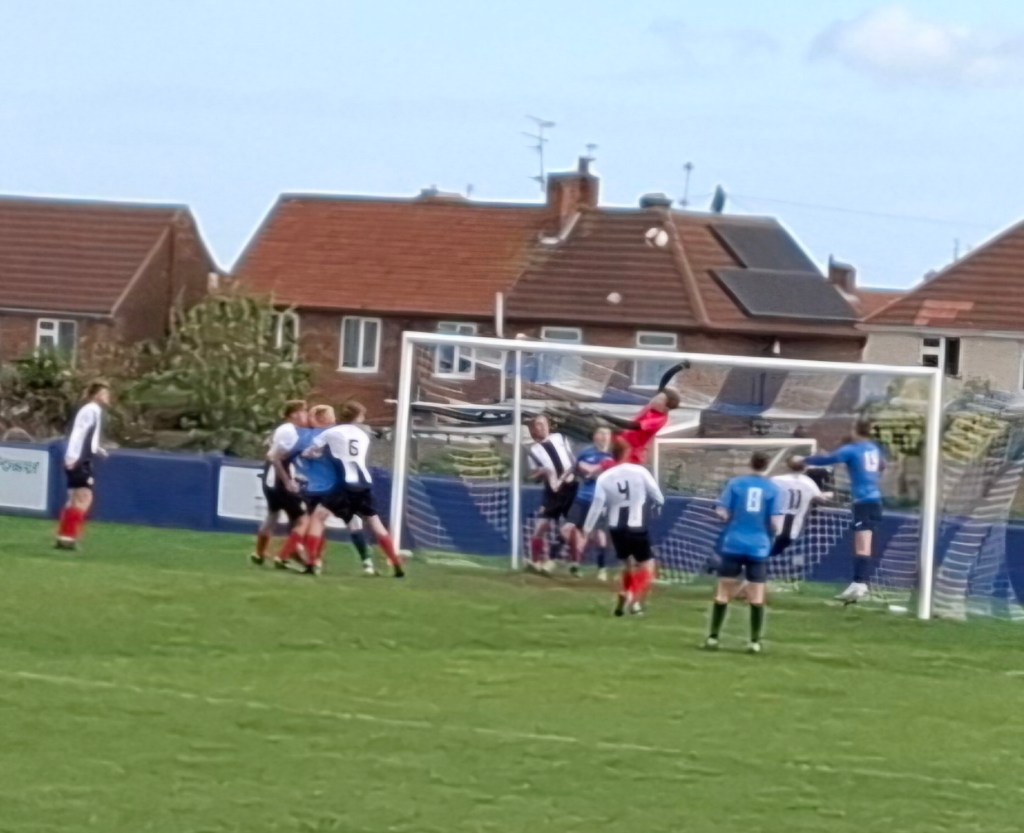
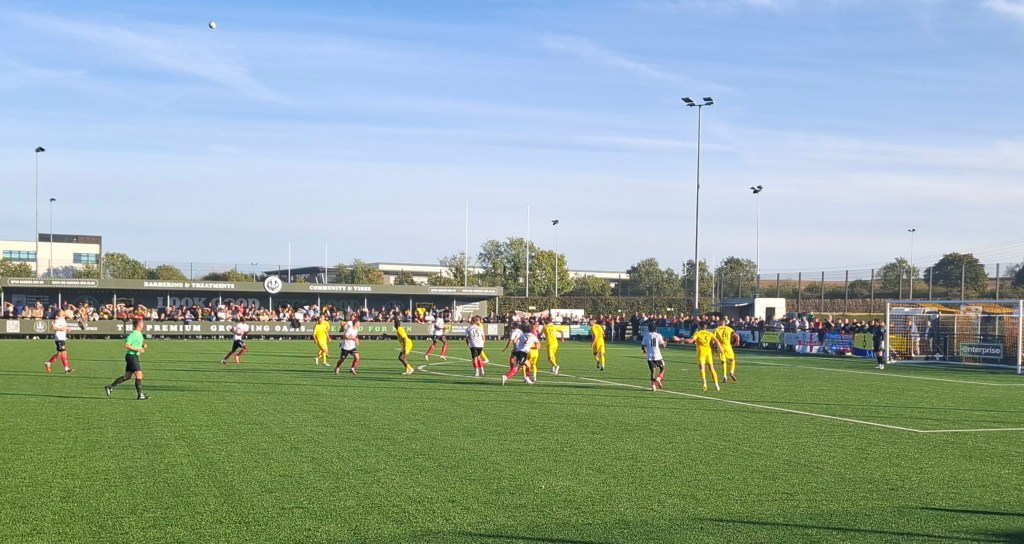
Tadcaster would not lie down and a corner from the left was headed out, headed back in, headed out and then Ryan Gothard headed it back into the net on 69 minutes. Only 4 minutes later after a Bottesford break away, Stead in goal for the Brewers managed to tip a hard shot onto his bar and over.
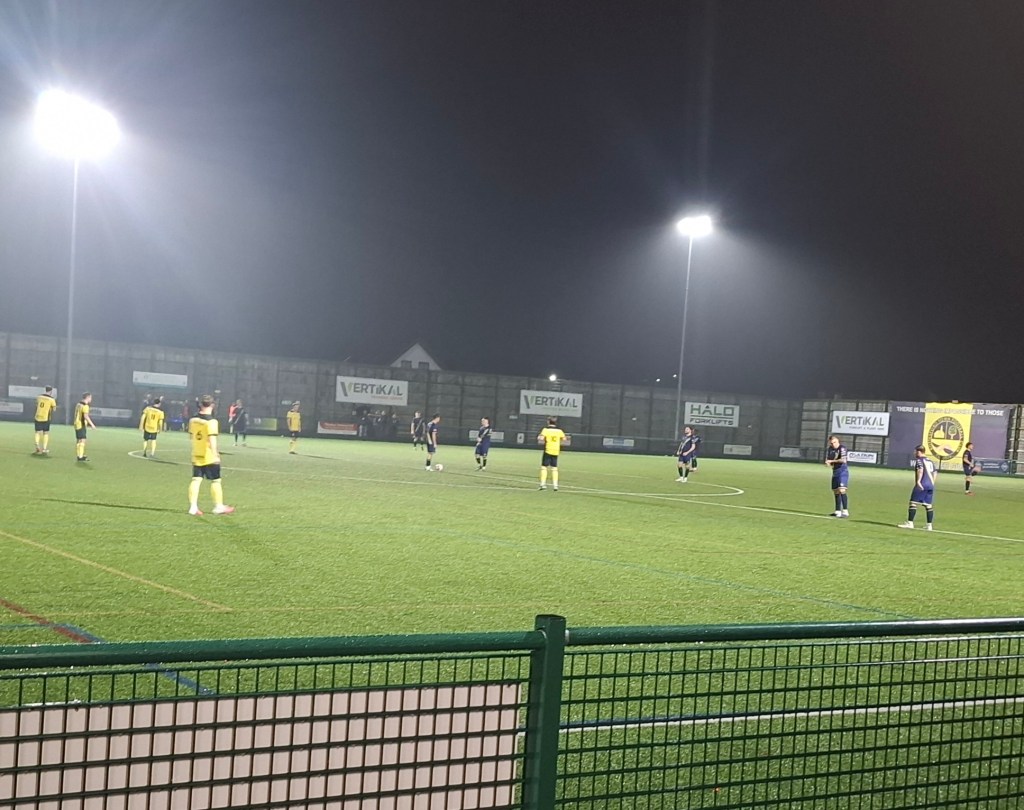
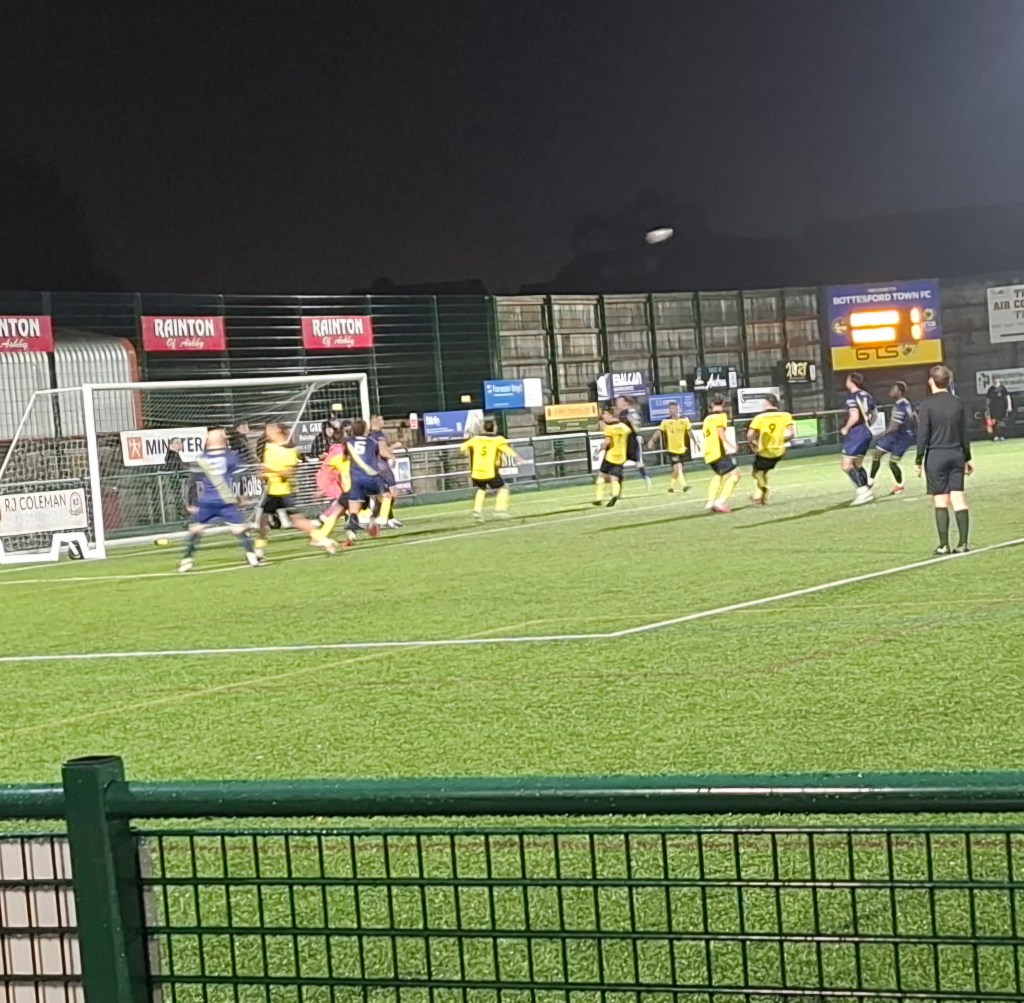
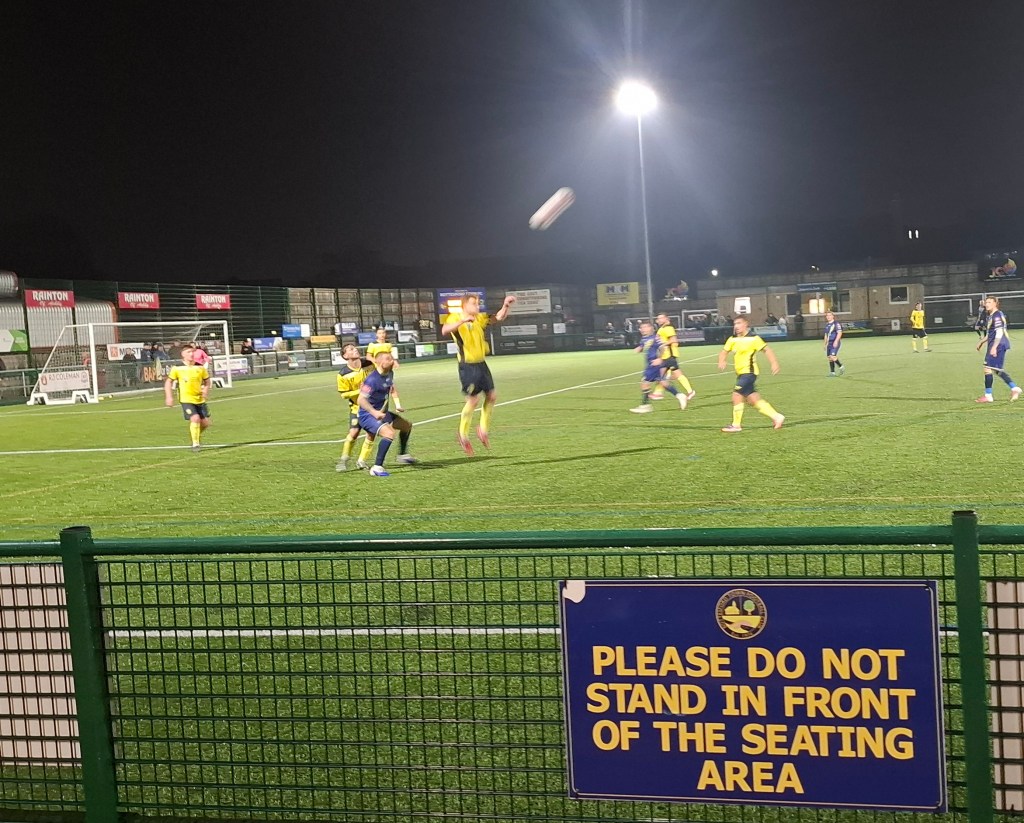
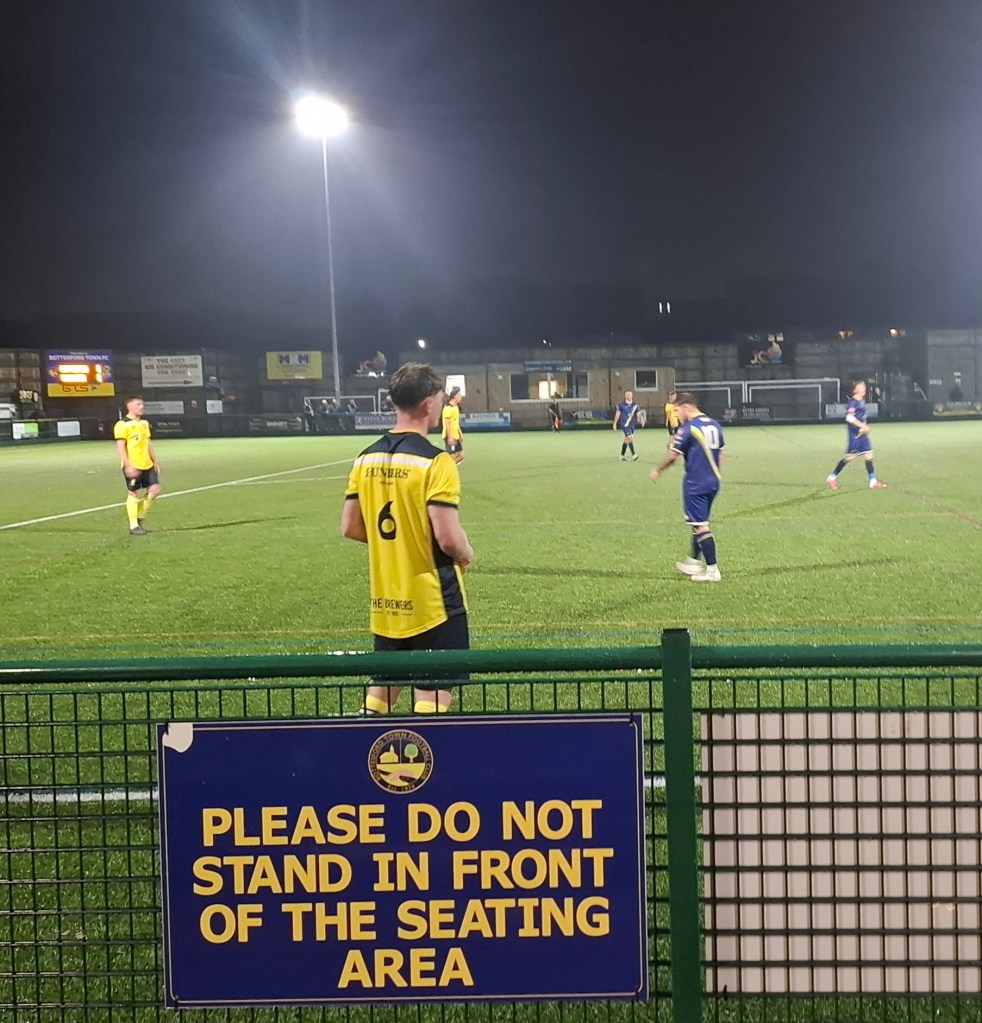
Both teams fought hard to get a winner but a draw was a fair result although it must have been better received by Tadcaster than Bottesford who were hoping to close the gap with Dearne and District at the top of the league.

The portion of chips was large but although the chips were hot they were not totally cooked scoring only 44,
N.B.
One thing I have noticed more and more is that lines people, assistant referees, rarely make decisions for themselves apart from offsides. They seem to look at the referee to point which way a throw in is to be given before they raise their flag. They also don’t appear to flag if they see a foul anymore.