
On a trip to South of the Thames that included no football match, I sneaked in a visit to Hackney Marshes and the Old Spotted Dog. I’ll start with the Old Spotted Dog the oldest senior football ground in London. Having been to the oldest in the world on Tuesday I couldn’t resist the opportunity, even though it was a slight detour.
The Old Spotted Dog
What a welcome, it was difficult to get in with the footpath in the area being upgraded to high spec block work, but by chance one of the committee, they all have equally votes here, let us in and showed us round. What enthusiasm and pride in what they have achieved, it was infectious.
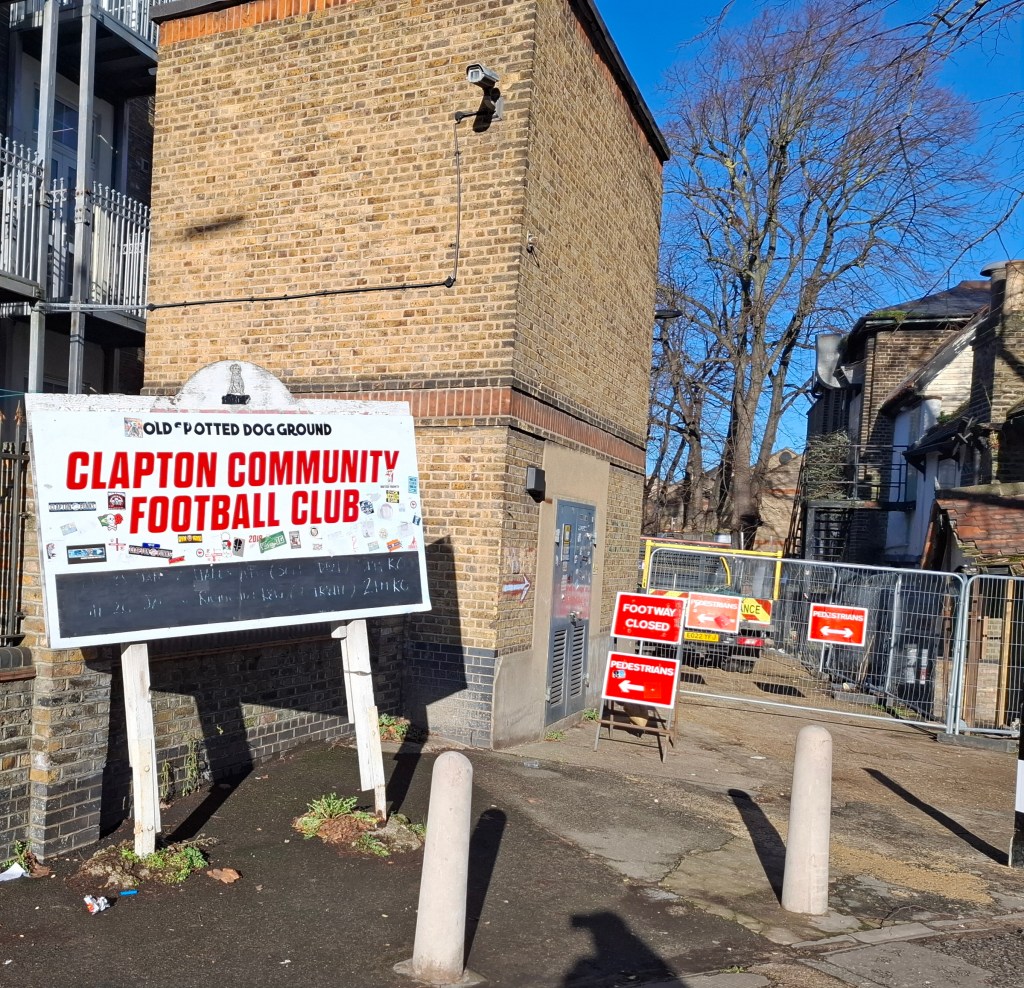
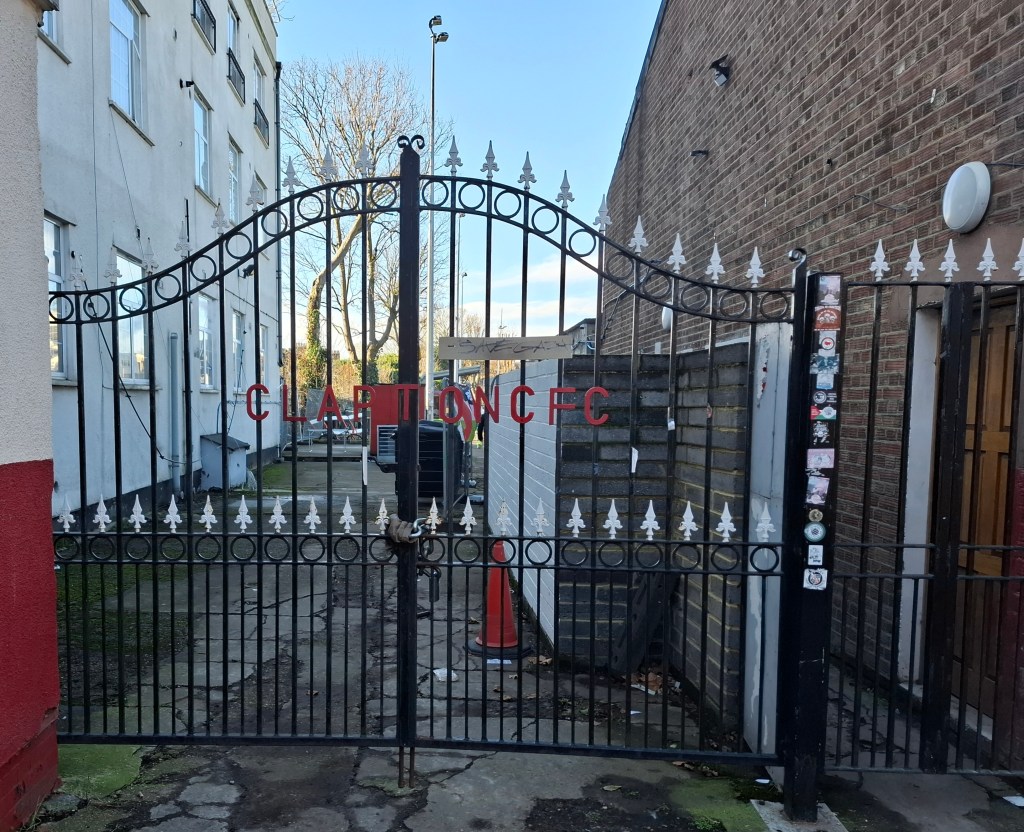

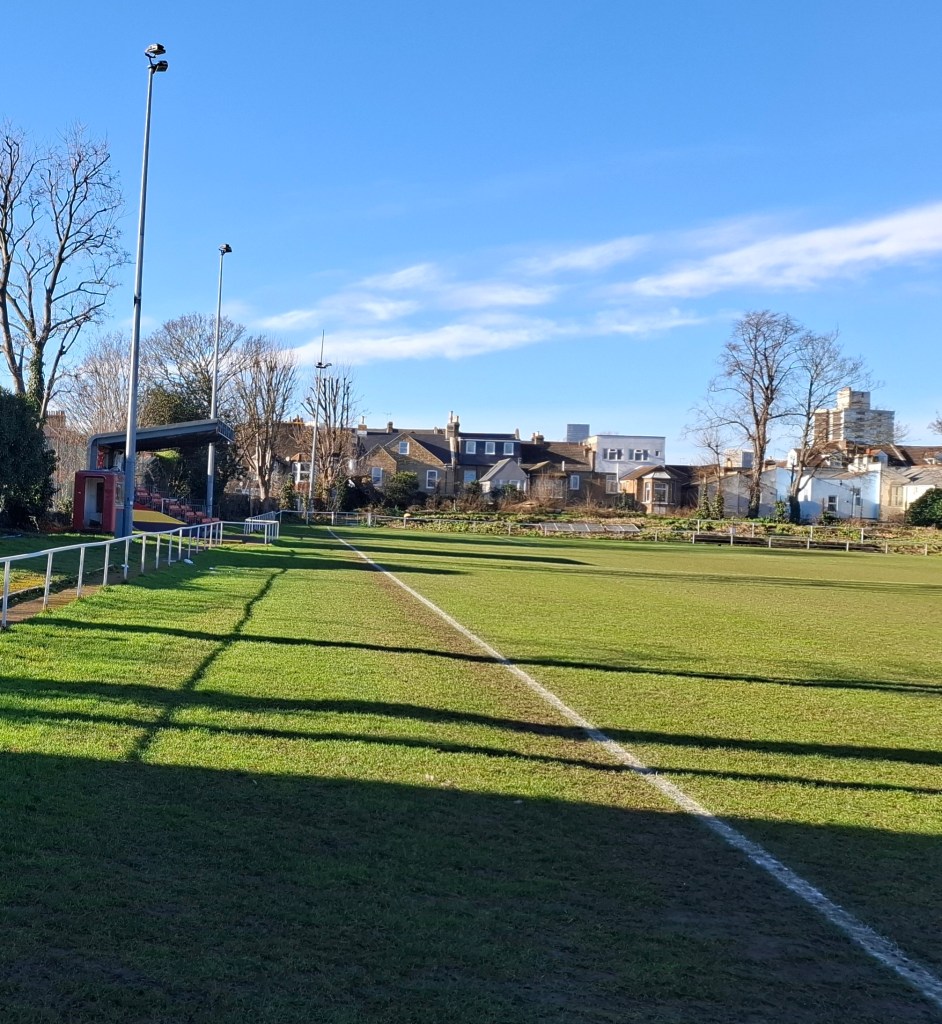
I remember Clapton playing in the Isthmian League against St Albans many moons ago but that team is no more with the last owner falling out with the fan base. A new team was formed, Clapton Community Football Club, and they were able to buy the Old Spotted Dog Ground from Heineken and start to reclaim it from a sorry state. One of their main income sources was from the sale of their away shirts, the design of which resembled the republican movement in Spain and led to 5500 shirts being sold there. The sale of the shirts allowed the club to purchase the ground from Heineken who once owned the building next door which was a brewery.
The Clapton Community club was formed on 27 January 2018 by the disgruntled fans and they have progressed through playing on Hackney Marshes and other venues, through the Middlesex County League and now play in the Southern Counties East Football League Division 1.
The club now run men’s, women’s, youth and development teams all of which are fully inclusive to reflect the ethos of the club and community. The club is run by it’s members, anyone can join, on a democratic basis, where there is equity between women and men. Financial issues are dealt with full transparency by issuing their accounts monthly. The clubs ‘Community’ in the name is matched by their local involvement having for example a hardship fund for those in distress. They also have a philosophy of ‘not pricing anyone out of football’ by allowing you to pay what you can afford, zero if necessary.

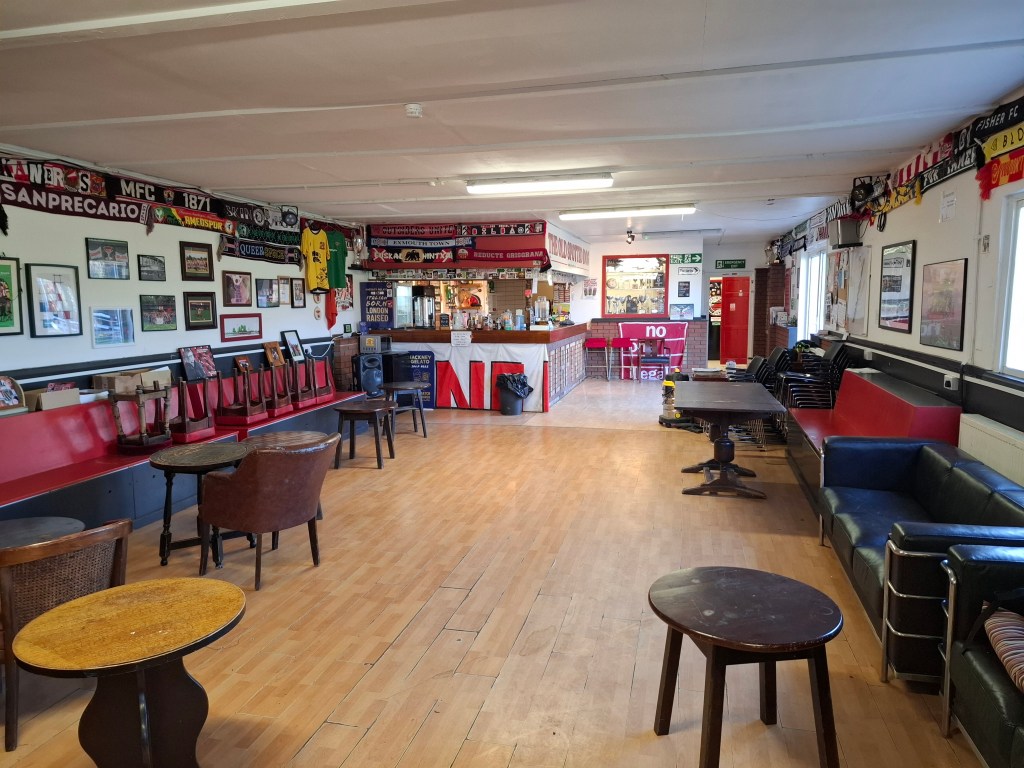
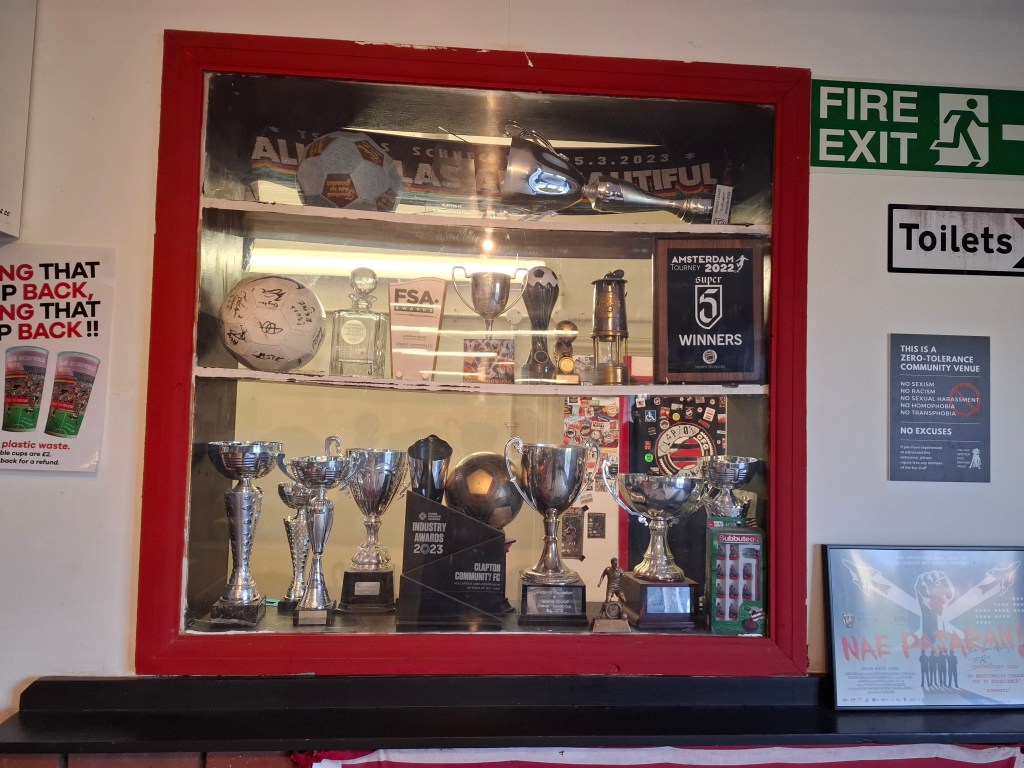
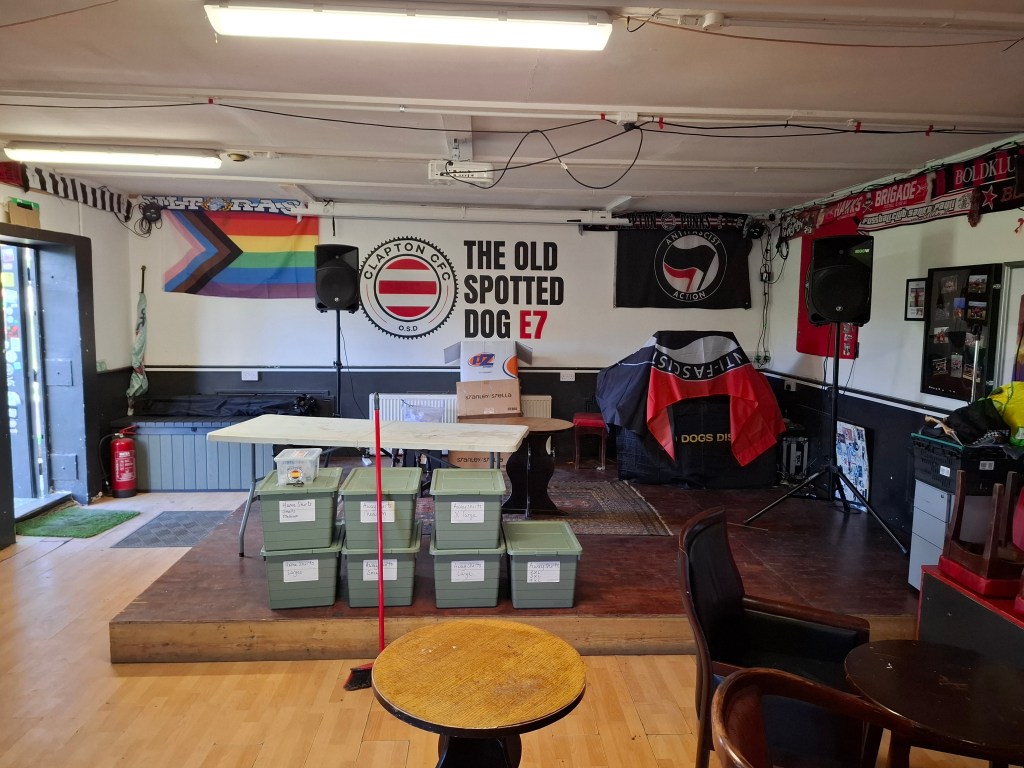
I could write for hours about this club but instead have challenged myself to return and watch a game and further write then. I have also joined as a member.
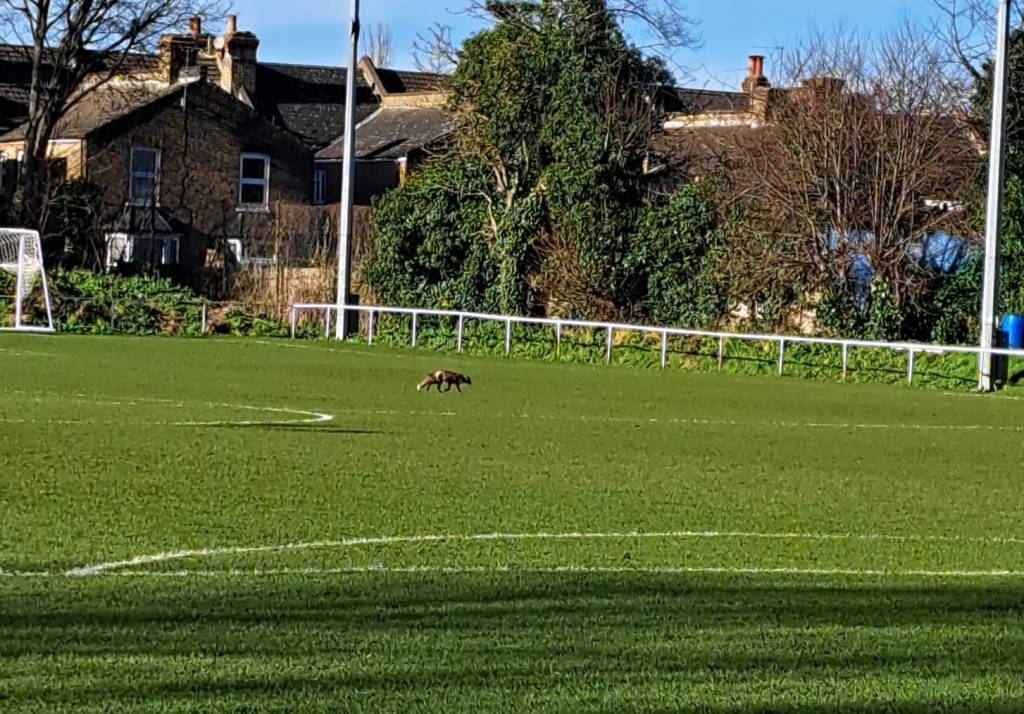
Such is the inclusivity that entering the ground there was an urban fox sat in front of the dugout looking at the pitch. I think he was planning the tactics for the afternoon match which they won. We were told that often the youngsters who play on the pitch can be distracted by the foxes and that the members have to clear fox poo off the pitch before games.
Hackney Marshes
Before I went to Clapton I visited nearby Hackney Marshes, where there are over 80 football pitches and has been a spiritual home to grass roots football in London for many years. It is thought that football has been played on the marshes since the 1880’s but its biggest expansion and use was after 1946 when rubble from the destruction by the Blitz were deposited there and used as the substrate to layout approximately 110 football pitches. Today there are also cricket and rugby pitches, some with artificial surfaces and modern changing rooms. The Marshes are considered the birth place of Sunday League football which has its rivals in other parts of the country but it certainly was at the forefront of this part of the game.
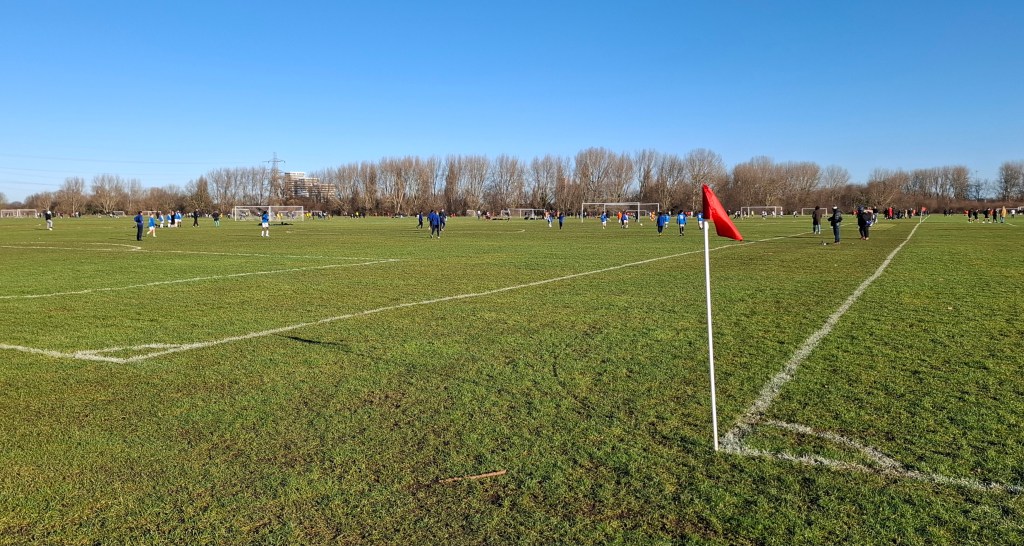
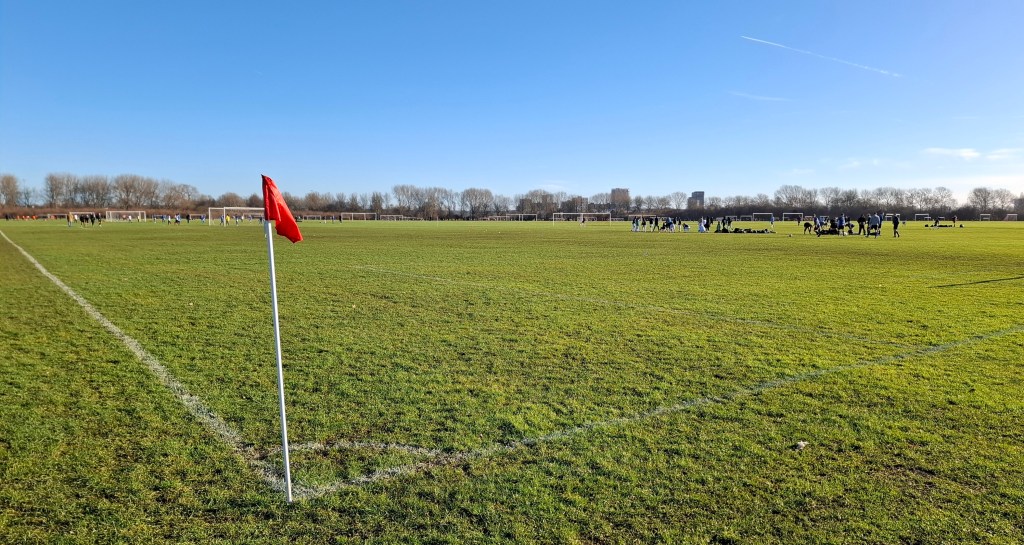


With so many pitches it has a unique atmosphere where many teams and players have come together over a century, where players had a space to belong and achieve at their level.
I myself played here in 1966/67 when I played for Luton Nomads in a South East England Jewish Sunday League. Not being of the faith I was made an honorary member and played in many parts of London but my best memories are from ‘The Marshes’ on a wet windy Sunday afternoon, racing over three pitches to retrieve the ball with the teams on those pitches totally ignoring you as they were concentrating on their own match. It was fantastic on Saturday morning to see people of all ages using the pitches to their best advantages and having the same enjoyment that I had so many years ago.
Football continues to be threaded in our culture at all levels of the game.

The Old Spotted Dog Inn, reputed to be an Hunting Lodge of Henry the eight net door to the football ground which the local community are also attempting to revive.
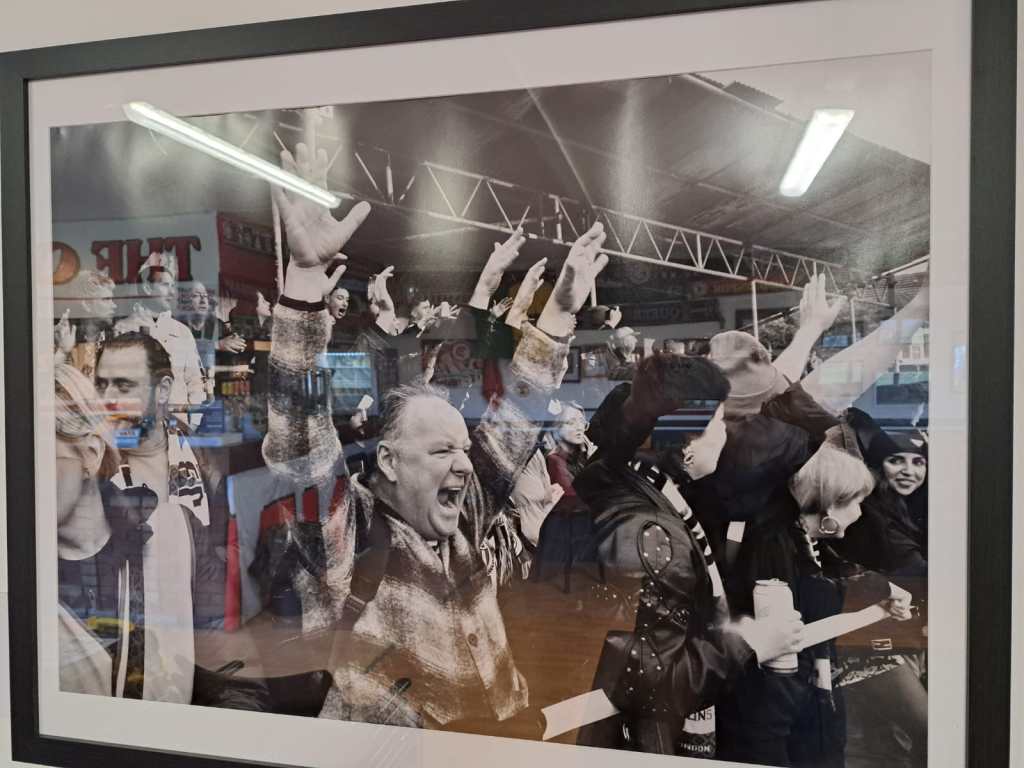

This picture was displayed on the walls and was photographed by the son of the man who showed us round. It has recently been displayed in the West End of London and will soon be displayed at an exhibition in Paris. Football can join us all together.
 payonthegate